



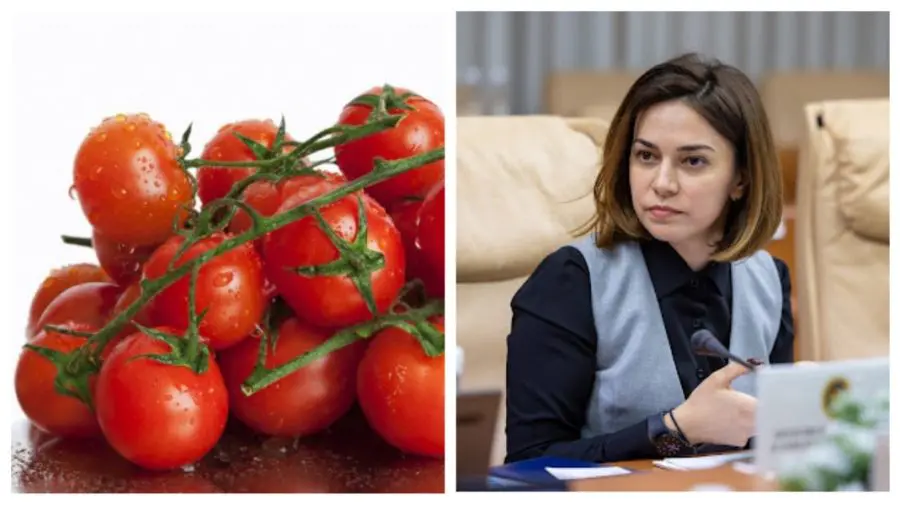
The Minister of Agriculture and Food Industry, Ludmila Catlabuga, said on Vocea Basarabiei TV that the main problem facing domestic products on the local market is not their absence from store shelves, but their low attractiveness and competitiveness compared to imports. She gave Moldovan tomatoes as an example, noting that consumers do not always choose them even when they are available.
The minister stressed that farmers must ensure not only sufficient quantities, but also year round continuity of supply in order to enter large retail chains.
“You cannot deliver tomatoes only in August. To export or to enter a retail chain, you must supply the product throughout the year,” Catlabuga said.
She stated that promoting domestic products remains a government priority and that authorities have already launched dedicated campaigns. However, she emphasized that image campaigns alone are not enough.
“We need greater visibility for farmers, as well as solidarity and consumer education to encourage people to buy local products,” she said.
Catlabuga added that Moldovan products already appear on store shelves, but producers and retailers must improve their positioning and labeling. Authorities are considering clearer markings, such as “made at home,” to highlight local products.
Commenting on proposals to introduce a mandatory quota for domestic products in stores, the minister said that the so called “50 50” law remains excluded in its current form, although authorities could discuss alternative approaches. She warned that imposing percentages does not guarantee success.
“You can impose shelf space, but if people are not used to buying these products, you will not solve the problem,” she said, stressing that any measures must comply with European standards.
The minister also shared a personal observation. “I stood in a shop and saw tomatoes from Moldova and tomatoes from Turkey. The Moldovan tomato did not attract the customer.” She said that price and competitiveness also play a role, which is why the state will support farmers through subsidies and assistance programs.
“There are many nuances to address. This issue is not only about economic patriotism, but about the entire chain, from production and cooperation to price, quality, and consumer education,” Ludmila Catlabuga concluded.
In early November, the Ministry of Agriculture and Food Industry launched the campaign “Cumpar BUN de acasa” to promote Moldovan products, allocating 315,000 lei for related services. Authorities launched the initiative after repealing the mandatory 50 percent quota for domestic products and now rely on consumer engagement rather than legislative obligations.