



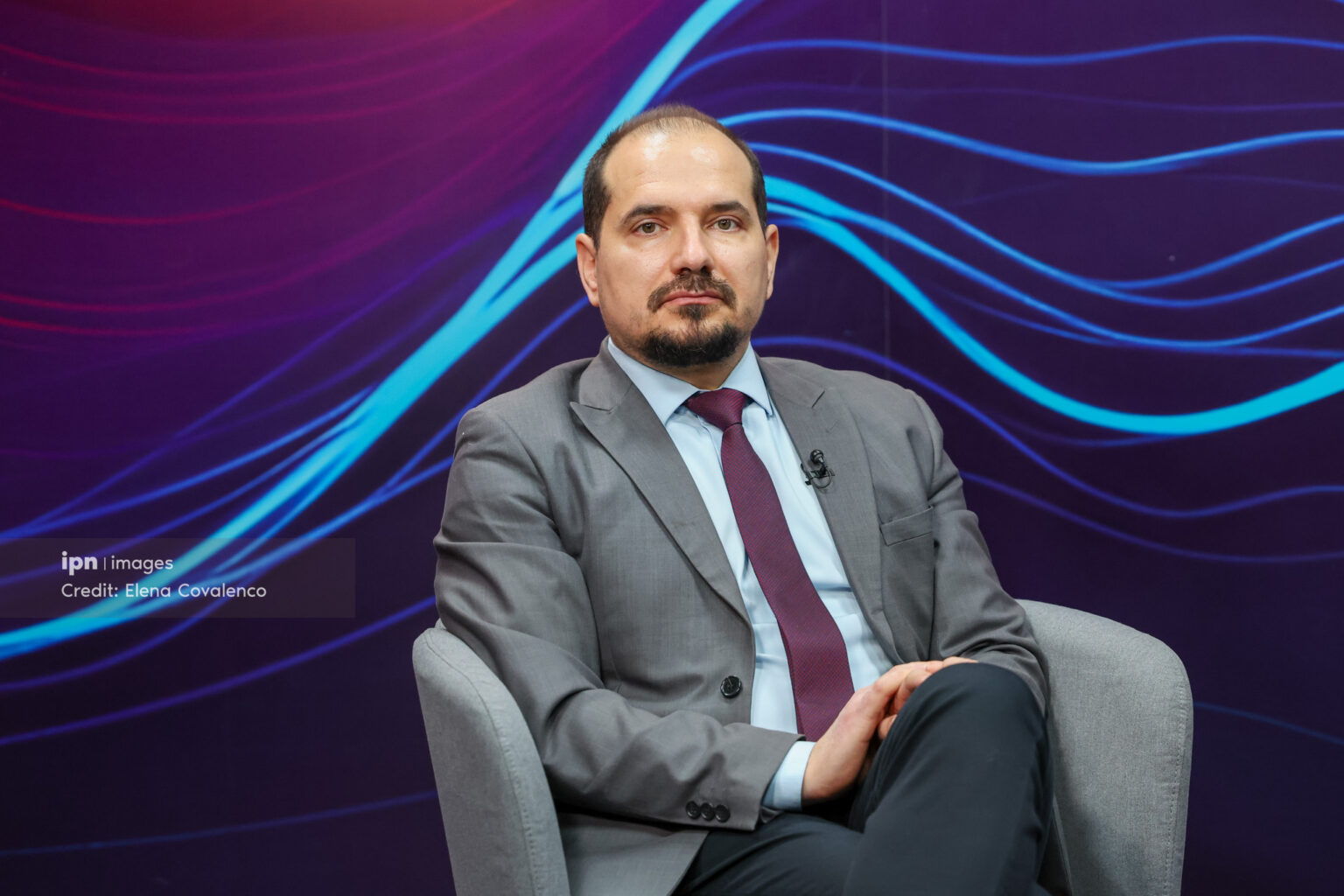
The local elections of 2027 will take place based on the new administrative map. The current system, marked by excessive fragmentation and limited resources, especially in small localities, can no longer efficiently meet the needs of citizens and risks deepening inequalities. In an interviewfor IPN, the Secretary General of the Government, Alexei Buzu, explains why the reform is considered inevitable, how the town halls will be reorganized, what will happen with public services, and what are the next steps until the application of the new administrative map.
Last time you were at IPN, we also discussed this reform. Back then, you were just at the beginning of public consultations. They have ended, you recently came up with a concept. Can you tell us what changes are to come?
I have concluded the first phase of consultations, there will be others to follow. This is a reform that is far too important, therefore the Government will constantly consult with citizens, mayors, local authorities, and civil society.
What we have noticed in recent months were things, I believe, known to everyone. We just put them, in a more coherent way, on paper. In the Republic of Moldova, we have many strong mayors and teams of public officials in town halls who, day by day, in difficult conditions and with limited resources, try to solve problems and provide better services to our citizens. However, they operate in weak structures, in town halls where, on average, only 11% of revenues are their own, and the situation has become much more critical in smaller town halls, especially in those with a population under 3 thousand inhabitants.
We have observed that, over the last 10 years, approximately half a million citizens have left communities with fewer than 3 thousand inhabitants. The tax base is shrinking. In our country, 8 out of 10 families without sewage and 7 out of 10 families without water are located in localities with these municipalities of fewer than 3 thousand inhabitants.
This is a clear signal that we have a structural problem in the Republic of Moldova. It is not a problem of the mayors, officials, or advisors, but a system issue.
We have an excessive administrative fragmentation, and this means that these town halls and their inhabitants are caught in a vicious circle. A small town hall – people leave. If people leave, the tax base decreases, resources dwindle. If resources dwindle, you can’t invest in adequate living conditions and consequently, even more people leave. This is the basic premise from which we want to start. We want to offer opportunities to our citizens. We cannot keep them “prisoners” in less efficient structures.
We want to consult the town halls. On the other hand, even the larger town halls, even though there are more opportunities there, we need to understand that, starting from the year 2028, the Republic of Moldova will benefit from pre-accession funds. Now we benefit from the Growth Plan, but, from 2028, we will have access to pre-accession funds.
These are funds that you obtain in a competitive manner. Our town halls are less competitive compared to those in the Balkans, which have had years to prepare, have learned from their own mistakes, and have adapted. The town halls in the Balkans have a larger share of their own revenues. This means that they can more easily identify resources to co-finance more ambitious projects. Therefore, by 2028 we must hurry. We need to thoroughly do our homework, because otherwise we will not be able to fully capitalize on this opportunity.
These are the two objectives that we aim to achieve largely through this reform: on one hand, to offer the chance of development to all our citizens, and on the other hand, to ensure that we thoroughly prepare ourselves for 2028.
Regarding this figure of 3 thousand, how was it reached? Initially, there was talk of a minimum number of 1,500 places
1,500 is a provision within the current legal framework. However, we have conducted this analysis and observed the experience of other countries and determined that 3 thousand would be a minimum threshold, attention – a minimum threshold for the operation and sustainability of a town hall. We certainly encourage mayors from our country and local authorities, communities, to make a much more ambitious effort to amalgamate.
In Moldova, we have this extremely bizarre situation, where in 776 municipalities we have 40% of the population, and in another 26 municipalities we have 42% of the population. So, we have in 26 municipalities as much as in the other 776. It is clear that these 26 have much greater capacities, and if we do not solve this problem, then inequalities in terms of opportunities, economic development and access to basic services – such as water, sewage, sanitation – will intensify.
If at the national level, in the last 10 years, the population has decreased by 14%, in municipalities with less than 3 thousand inhabitants the population has decreased by 33%, therefore twice as fast. And this means that, without an intervention and without a clear perspective, the question remains open: what is the future of these municipalities in 15 or 20 years?
How will this happen in practice? Where will the administrative center be? And what about the services necessary for the citizens?
We place a great deal of emphasis on the process of voluntary amalgamation. This means that local elected officials, mayors gather, decide, negotiate and build a common vision. Yesterday, we saw a commendable effort in Ungheni. There, around the municipality of Ungheni, several mayors will unite, and the population number will significantly increase. We calculated the incentive, and the Government tripled it. The new municipality will benefit from 125 or 135 million lei. This is a significant investment, intended to ensure that we have strong, quality services and adequate infrastructure there.
Mayors, local elected officials, and communities know best, they can negotiate how to strengthen their teams, resources, and budgets, and how to expand their administrative boundaries. The names of the villages will remain intact – the village remains a village. What changes is only the administrative boundary and the name of the town hall, but the names of the villages will remain unchanged, as they have always been.
On Thursday, I went to Parliament, where the simplification of the voluntary amalgamation procedure was voted on in the first reading, which becomes more flexible and less bureaucratic. Very importantly, there will no longer be a stage of early elections. As I said, the Government will triple the development incentive. This means that, if until now the executive came to the amalgamated town halls with an incentive equivalent to 1,000 lei per inhabitant, now this incentive is 3,000 lei. In this way, the amalgamation process is not just one of administrative consolidation, but also a moment when we can invest in communities to solve deeper problems.
Regarding the expansion of administrative boundaries, how do we ensure citizens’ access to the town hall or other services when they need them? There are fears that, in some cases, people will have to travel distances of 15, 20 or even 30 kilometers, especially given that there is no longer a limit of 25 kilometers, as it was before. How do you respond to these concerns and what solutions are envisaged to guarantee easy access to services?
Firstly, we must ensure that citizens are not put in the position of having to go to the town hall. When we create or manage public services, especially administrative public services – certificates, extracts, and other documents – the first question we must start with is the following: the services should be offered where the citizen is located.
What we will do is that, in the amalgamated town halls, we will facilitate the opening of these unified service delivery centers, the so-called CUPS, where the mayor’s representative will manage and will have the training, preparation and access to various informational systems to provide services or to mediate access to services.
So, beyond the fact of no longer requiring citizens to go to the city hall, what we want is for them not to have to go to the administrative headquarters city to access services offered by other institutions. Currently, we are working within the Government to ensure that we provide this support. In recent years, we have managed to significantly simplify access to services, such as compensations, that support for the cold period of the year, when, in less than a month, we registered over one and a half million citizens, we established the value of the compensation and so on.
We have this capacity and we will continue to work in this direction. This reform is an opportunity to bring services closer to citizens, even if the administrative center will move away.
Are we saving in this way or, conversely, do we have higher expenses?
We come with this stimulus package of approximately 6 and a half billion lei. The reform is not made to save, but to consolidate and to make the activity of the town halls much more efficient. In town halls that have, on average, under 3 thousand inhabitants, the administrative expenses of a town hall are four and a half times larger than their own revenues. It is clear that, under such conditions, you cannot have enough resources or own revenues to direct them to solve the specific problems of the citizens in that locality.
We often have discussions about local autonomy. One thing is what is written in the law and another is what happens in practice. When administrative expenses are four and a half times greater than own revenues, we cannot speak of a genuine local autonomy, beyond the fact that these notions are provided for in the Constitution and laws. In practice, this does not happen. To have real local autonomy, there must be resources and capacity, and this is what we want to achieve through this reform.
These funds that you mentioned, where will they be secured from?
The funds come from the state’s own resources, but also from the Growth Plan financed by the EU. As we have conceived the Growth Plan, a significant portion of these resources will go into infrastructure, energy, and local and regional development. Accordingly, a portion of this investment package will be funded by the Growth Plan.
Speaking of these incentives you mentioned, I understand that they are granted during the amalgamation process. After its completion, will the localities continue to benefit from certain forms of support?
Certainly. We have three types of incentives. The preparation incentive is up to 400 thousand lei for technical documentation – if you want, for example, to develop a service or to intervene on the infrastructure. There is the development incentive, which the Government offers, and a post-merger incentive, of up to 2 million lei for the newly created city hall. In this case, this will be available starting from the year 2028. Therefore, the elections will take place in the fall of 2027.
Accordingly, the local elected officials, for 3 years of their 4-year term, will benefit from this support. The additional 2 million lei will come into their budget, and the local elected officials will decide how to use these resources: for investments, for institutional consolidation, or for salary increases, so as to attract better specialists within the team.
Furthermore, the Government and the State Chancellery will continue to work, as we already work with the municipalities, to provide them this support. We have offered them support pre-amalgamation, so before the elections, and post-amalgamation, after the elections, to ensure that we integrate all services, that we develop the capacities for project development, making acquisitions according to all rigors, ensuring financial control and so on.
We have launched an “amalgamator”. It is available on the website strongmayoralties.gov.md. Depending on the amalgamation scenario – the number of communities and the number of citizens from those mayoralties – the amalgamator determines the value of the incentive and indicates the corresponding incentive.
Additionally, we have launched a tool through which all citizens and all local elected officials can view the budgets and the way in which all the town halls in the country are budgeted. We provided this tool to facilitate dialogue, because when 3, 5 or 6 town halls negotiate among themselves, it is important to document and have certain analyses, so that decisions can be made in an informed manner.
We expect that there will be those who do not wish to voluntarily amalgamate. Until when is this term, when does it expire, and what do we do afterwards?
At present, we have 339 initiation decisions. It’s a positive signal. The local elected officials in our country are pragmatic and patriotic, because they care about their localities and citizens and are ready to make this brave step.
I have also told my colleagues in Parliament that I believe we should follow this example of courage and commitment at the level of Parliament and Government, because if local elected officials are ready to give up their own town hall in order to consolidate and provide more development opportunities for localities, then we should do the same. Therefore, we have tripled the incentive and simplified the amalgamation procedure.
However, if such cases arise, which we hope will be limited in number, we will apply the standard amalgamation procedure. This means that we will discuss with local elected officials and citizens, but if the population of a town hall is under 3 thousand and voluntary amalgamation is not desired, the Parliament will decide to include that town hall within another.
Certainly, this will be done after consultations, discussions, and negotiations. However, we will not tolerate situations where citizens become prisoners of political indecision at the local level. We will not allow this.
When will this process of normative amalgamation begin?
In July of this year, we will draw the line and see at what stage the voluntary amalgamation process is. We will analyze whether there are involved municipalities, and we are already doing this at the moment. We discuss and encourage all mayors to initiate these discussions and negotiations, and if they do not want to do this, we will talk to the citizens and try to understand their themes and concerns. This fall, this new law on the administrative-territorial structure of our country will be approved.
Regarding the districts, I saw the figure you announced about reducing the number of districts from 32 to 10. How do you see this process in relation to the districts, including their naming? We know that these are stipulated in the Constitution and that the subject has been discussed before. What do you intend to do?
We have discussed with approximately 4,500 local elected officials and mayors over the last three months. On rare occasions we discussed the naming of districts. Local elected officials are much more pragmatic. They want to understand the resources, capabilities, people, and teams. As for the districts, I believe that, starting from 2015, their role and relevance began to decline. There are very good professionals, but, again, as at the first level, they found themselves in structures that have become less relevant.
We have taken on responsibilities in the field of social assistance and health. Education is set to be assumed as a competence. Approximately 80% of the district budget is directed towards education.
In this context, we believe that the new structures should have a narrower mandate, focused on regional development. It is a rethought structure, because, starting with 2028, as we said, these structures must work together in order to access European funds, to develop serious infrastructure projects, projects in the field of communal services and so on. We believe this should be the role and mandate of these structures after the reform. We will provide them with the necessary support to work with these teams and to develop the appropriate capacities.
If the number of units will decrease, how will the situation of citizens’ documents be managed? Will it be necessary to change them?
We are discussing, we have a technical group at the Government, with all the relevant institutions, to ensure that any change related to documents is made much easier, in a centralized manner, so that citizens are not put in the situation of having to go and change their documents and so on.
UTA Gagauzia – how is the region viewed in this concept?
We have no plan regarding the mandate of this unit. Inside there are town halls that need to merge and we have discussed with those mayors, and there are our citizens who want strong town halls, decent services, and we encourage and will manage the amalgamation process there too. But, at the level of Gagauzia’s competencies, the reform will not bring any impact.
Can the localities there, for example, merge with localities that are not part of the region?
No, only within Gagauzia.
Do we understand that we are entering the 2027 elections with this new concept?
Yes, so the elections of 2027 will take place based on the new administrative map of our country. We will elect mayors and local councilors based on the new administrative entities.
Have you thought about the risks that this reform might bring?
We have discussed the risks. The fact that citizens will be further from the administrative center, and that’s why we intervened with these CUPS, the risk of the process becoming politicized, of manipulations appearing, of this rather complicated and sensitive reform being used to divide society, to weaken our consolidation effort.
Many countries have undergone such reforms many years ago, and some are already implementing other stages of development. For the Republic of Moldova, is this reform currently necessary and timely?
I believe that this reform is not only necessary, but it is much overdue. And the fact that 8 out of 10 families do not have sewage, and these families are in those municipalities with less than 3 thousand inhabitants, is not a coincidence. It is a structural problem and, in my opinion, any discussion that starts with “let’s postpone” or “let’s not rush” is a lack of respect and responsibility. We can no longer wait.
I believe it’s clear to everyone that we have this issue. And the fact that the reform is complicated and involves risks is not an argument for delay. It’s an argument for better planning, for better preparation, but not for delay or inaction. And, as I said, we have these local elected officials, strong mayors, who have bravely taken on these amalgamation decisions and we must follow their example.
Do we now understand that another round of consultations is to follow?
We have several processes running in parallel. We are preparing these CUPS to provide services to our citizens, we are preparing the legislative package. We are working in the field with the town halls to facilitate the amalgamation process, we make sure we consult the citizens and listen to their opinions. We are analyzing these tripled incentives and we need to reach a consensus on the development priorities that we will implement.
We are also working on the fiscal consolidation of town halls, together with the Ministry of Finance, we are analyzing how we can share more taxes from the local economy, so that they remain at the level of the town halls, so that local elected officials can solve citizens’ problems more quickly and efficiently. We have a lot of work to do. We want to digitize town halls to make them more efficient, to introduce a single computer system, to prepare all local elected officials.
We must prepare for 2028, when we will have access to pre-accession funds and I do not believe that anyone will forgive us if we miss this opportunity to significantly invest in infrastructure, in our country’s human capital, in the energy system and so on.
Mr. Buzu, thank you very much for this discussion!
I thank you too.
Irina Boțu, IPN
Disclaimer: This material was prepared by the IPN Press Agency, within the project “Local Public Administration Reform in Dialogue”, funded by the Ministry of Culture from the Media Subsidy Fund.