



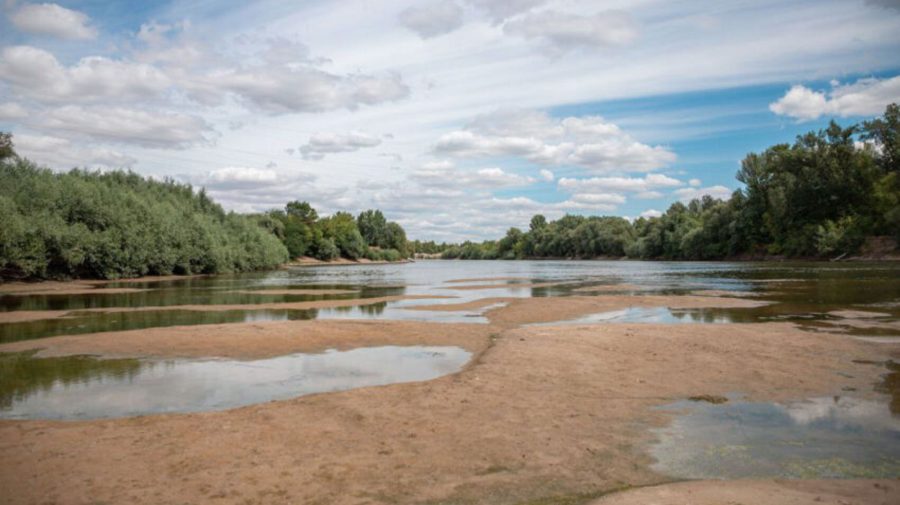
The water level at the Novodnistrovsk Reservoir has fallen by another 25 centimeters since the beginning of August, reaching 112.76 meters compared with the normal retention level of 121 meters. Environment Minister Gheorghe Hajder warns that the decline will continue throughout August and September if sufficient rainfall does not occur.
According to the minister, the reservoir’s water level fell by approximately one meter in July. Current forecasts do not indicate enough rainfall in the coming weeks, while precipitation that could improve the hydrological situation is not expected until October.
“August and September will be the most critical months from a hydrological perspective,” Hajder said on Monday, August 10.
The Dniester Commission will conduct another assessment of the situation on Tuesday. Authorities will review the water level and developments in the Dniester River basin.
The Moldovan Government declared a hydrological alert on July 28 for a period of 30 days amid a sharp decline in river flows and falling water levels in reservoirs.
As part of the emergency measures, authorities have introduced several restrictions. Residents and institutions may no longer use drinking water or surface water for non-essential activities such as washing streets and sidewalks or filling swimming pools and recreational basins.
Authorities allow water extraction from the Dniester River and agricultural irrigation only at night, between 21:00 and 06:00, with priority given to horticultural crops. Officials will monitor irrigation activities, and the Environment Ministry may temporarily suspend water extraction in areas where water levels reach critical thresholds.
Local authorities must activate reserve wells to ensure continuous water supplies. Public utility operators will also increase water quality monitoring at intake points.
If the situation deteriorates, Moldova’s General Inspectorate for Emergency Situations will prepare logistical capacities to distribute drinking water using mobile water tanks in affected communities.
The National Crisis Management Commission has also ordered economic operators whose activities are not essential for food production, healthcare or public health to reduce their water consumption by at least 20%.