



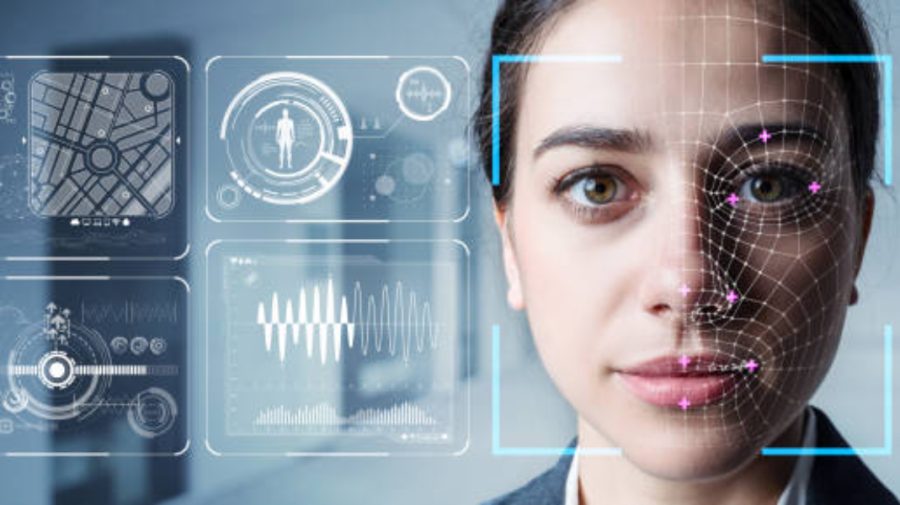
Moldova could establish a Facial Image Registry (RIF) that would allow authorities to automatically compare photographs and use biometric identification in criminal investigations, to identify individuals and search for missing persons, IPN reports.
The project was drafted by the Ministry of Internal Affairs (MAI). According to the document, the registry would be a state information resource containing both images of identified individuals and photographs of people whose identities have not yet been established.
The project is currently going through the approval process. On September 18, 2026, the Interior Ministry held an online public consultation. However, the discussion did not take place because no representatives of interested parties joined the meeting.
The Interior Ministry also said that institutions responsible for protecting fundamental rights had previously participated in the review process and submitted objections and proposals. According to the ministry, these were taken into account when finalizing the draft.
What Is the Facial Image Registry?
The registry is not described in the draft simply as a collection of photographs. The system would be able to receive, store and manage images, compare them biometrically and provide authorities with tools to identify individuals.
The registry would separately contain “identified” and “unidentified” facial images. Each image entered into the system would be assigned a reference number.
The system would support two types of biometric comparison: 1:1 and 1:N. The first would allow authorities to verify whether two images correspond to the same person. The second would involve comparing a photograph against multiple images available in the system to identify possible matches.
The computer system, however, would not have the final say. The list of automatically generated results would constitute only a preliminary technical result. Any potential match would have to be verified and confirmed by qualified personnel before producing operational consequences.
Where Would the Images Come From?
An important question is where photographs for the future registry would come from.
According to the draft, images obtained from authorized sources could be entered into the system. These would include photographs collected or captured during procedural actions, special investigative activities or other activities provided for by law, the cited source reports.
The registry could also use images extracted from lawfully obtained photo or video materials, as well as photographs provided by competent authorities in Moldova or other countries.
The system would also be able to exchange data with other state information resources. Such information could be used, among other purposes, to verify a person’s identity and associate them with a criminal case, a missing-person investigation or another individual case.
Would Photos of All Moldovan Citizens Be Added to the Registry?
No. At least, the draft does not provide for the automatic transfer of photographs of all Moldovan citizens into the Facial Image Registry.
Images could be entered into the system only on the basis of legal grounds and from authorized sources. Each operation would have to have a lawful purpose, while the data used would have to be limited to what is necessary to achieve that purpose.
At the same time, the registry could interact with other state information systems. This means certain information already available in public databases could be consulted or used through interoperability without being registered again in the RIF.
What Could the System Be Used For?
According to the draft, the system would be used to prevent and investigate crimes, identify or verify individuals, search for missing persons, and identify deceased persons or human remains.
In practice, a photograph of an unidentified person lawfully obtained during an investigation could be automatically compared with images available in the system. The software would then generate a list of possible matches, which would subsequently have to be verified by qualified personnel.
The draft also establishes limits on such searches. General, exploratory or purpose-free searches would not be permitted, nor would the system be allowed to be used to create discriminatory profiles.
Who Would Have Access?
The Facial Image Registry would not be a publicly accessible database. Access would be granted only to authorized individuals designated by institutions that provide or use the data. Each user would have specific access rights depending on their role and responsibilities.
Personnel responsible for managing the data would be able to enter and update information, as well as block, delete or archive records. They would also record the results of biometric comparisons and whether a potential match was confirmed or ruled out.
Operations carried out in the registry would be logged so that it could later be determined who accessed or used the data and under what circumstances. The draft provides for logging, monitoring and auditing mechanisms designed to ensure the traceability of access and operations performed in the system.
Could Data Be Shared Abroad?
Yes. The system is also designed for the automated exchange of facial images with other countries as part of police cooperation and the European Prüm II mechanism.
This component could include images of persons suspected, accused, indicted or convicted of crimes and, under certain conditions, victims. Images of missing persons or deceased individuals would not be included in cross-border exchanges.
Initially, the image would be transmitted together with a reference number. Identification data could be provided only after a match had been confirmed and in accordance with the law.
Who Would Oversee the System?
The state would own the registry, while the Ministry of Internal Affairs would be responsible for the system and coordinate its use and development.
The Interior Ministry’s Information Technologies Service would be responsible for developing and maintaining the application and administering the databases. The technical infrastructure and cybersecurity components would be handled by the Information Technology and Cyber Security Service.