



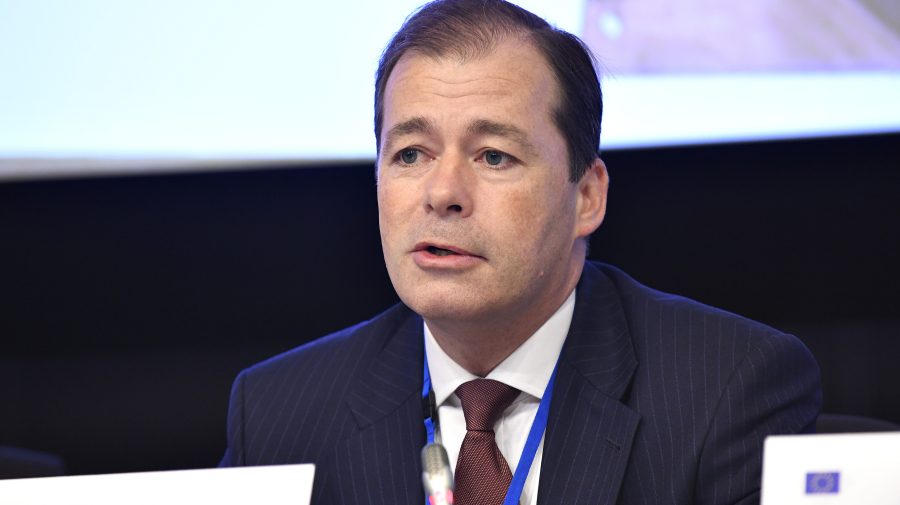
Germany can learn from Moldova what social cohesion means, according to Mark Speich, Secretary-General of the Konrad Adenauer Foundation. In an interview with PISA on the sidelines of the Moldova Security Forum (MSF), the civil society representative said that, in his view, democratic institutions and a free press are important for strengthening resilience.
According to Speich, social cohesion is becoming increasingly important for democracies. The foundation’s secretary-general believes governments must build trust to prevent divisions that could be exploited by hostile actors.
“Division, when exploited, leads to confrontation that polarises society. And that is what we are seeing across Europe. I believe we can learn a lot from Moldova, because this has been one of the challenges Moldova has faced for some time. Obviously, a state cannot impose social cohesion, but it can act in a trustworthy manner and help create an environment in which civil society can flourish. I believe this is crucial. Where societies are resilient, we see that kind of dense network of a functioning civil society, an awareness of the threats that exist, and a very clear position on who your enemy is.
“Once again, I would say that Moldova is an example, and a country like Germany can learn a great deal from it. Because here, it is very clear who the enemy is. And the way you deal with this is an example we should learn from,” Mark Speich said.
The Konrad Adenauer Foundation representative emphasised that Moldova needs active participants in public life and civic education to strengthen its democracy, make progress, and become more resilient.