


The relations between Japan and the Republic of Moldova are evolving towards a more mature level, based not only on assistance, but also on dialogue, and extensive cooperation, including in the cultural and human sphere. At the same time, Tokyo reaffirms its support for Chisinau’s European integration, considered a correct direction for the country’s development.
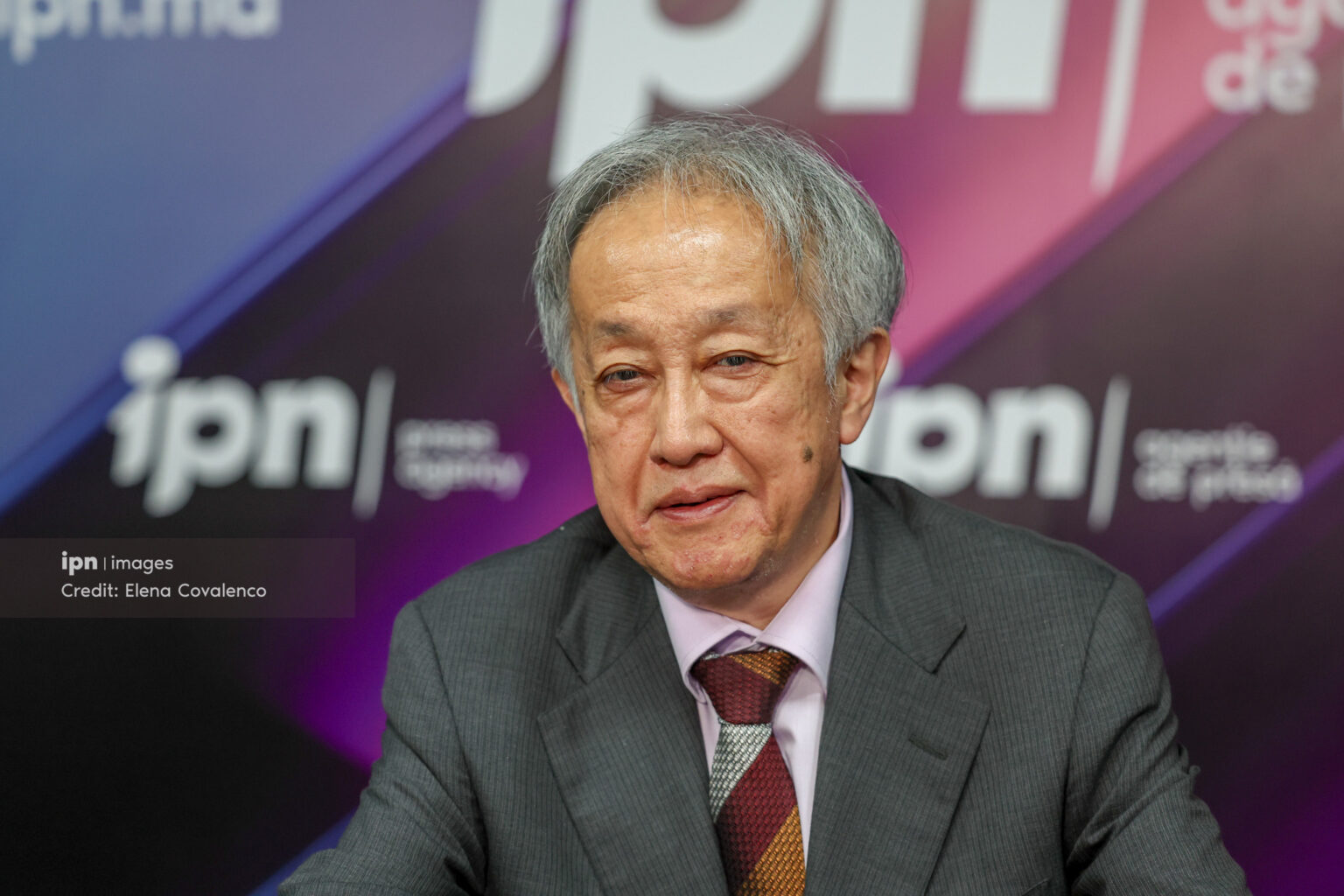
In an interview for IPN, the Japanese ambassador to Chisinau, Kazuyuki Takeuchi, states that the bilateral relationship surpasses the phase of occasional interactions and is nearing a consolidated partnership. According to the diplomat, in 2025 six high-ranking Moldovan officials visited Japan, where they discussed disaster management, crises, agriculture and the business environment.
From aid to a partnership based on dialogue
In addition to the political and economic dimensions, the relations between the two countries are increasingly influenced by cultural exchanges and direct contacts between people. In this regard, the ambassador mentions the 30th anniversary of collaboration between theaters in Moldova and Japan, as well as the annual organization of the “Bunkasai” cultural festival, now in its tenth consecutive edition. These initiatives, he says, contribute to deepening the bilateral relationship.
The assistance provided by Japan to Moldova is built on a simple philosophy: supporting the development of stable and prosperous societies within an international community based on rules. Tokyo believes that efforts to integrate into the European Union and the international system are beneficial and should be supported, especially when they are based on common values such as the rule of law and democracy.
The diplomat emphasizes that this approach is not specific only to the Republic of Moldova. Japan applies the same logic in its relations with other states that are trying to strengthen their institutions and promote stability, citing his previous experience in Zambia as an example.
Regarding the concrete impact of projects funded by Japan, the ambassador avoids highlighting a single domain. He asserts that interventions in health, education, and social infrastructure have each played a significant role in strengthening the development base of Moldovan society. According to him, the support is not only aimed at implementing specific projects, but also at supporting people’s efforts to build a more stable and functional society.
Why Japan Supports Moldova’s Integration into Europe
For the year 2026, Japan does not intend to change its priorities. Assistance will continue to focus on basic needs – health, education, and social services – considered essential for the country’s long-term development.
At the same time, Tokyo is closely monitoring the European path of the Republic of Moldova. Ambassador Kazuyuki Takeuchi states that Japan respects the efforts of the authorities and society to become part of the European space, considering that this process contributes to the consolidation of international stability.
Although the support of an Asian country for European integration may seem unusual, the diplomat believes that this is justified by the broader benefits for the international community. A stable Moldova integrated into European structures contributes, in Tokyo’s view, to a safer and more prosperous global system.
Referring to the implementation of projects, the ambassador asserts that, in general, cooperation with institutions and organizations in Moldova works well. However, he emphasizes that the support provided by Japan is not limited to the provision of resources, but also involves the responsibility of partners to use these resources efficiently and to ensure sustainable results.
“European integration is the right path”
After four months in office in Chisinau, Kazuyuki Takeuchi says he has rediscovered a pronounced European character in Moldovan society. In his opinion, integration into the European Union represents the correct direction for the country’s development, and the coming years will be essential for preparing this process.
At the same time, the diplomat draws attention to the fact that, in this journey, Moldova should not lose its identity and its own values. Although the requirements of the accession process are complex and involve significant efforts, preserving the national specificity remains important.
The Ambassador also asserts that, in his discussions with representatives from various fields, he noticed a clear determination of society to advance on the path of European integration. Japan, he says, will continue to support these efforts in the coming years.