



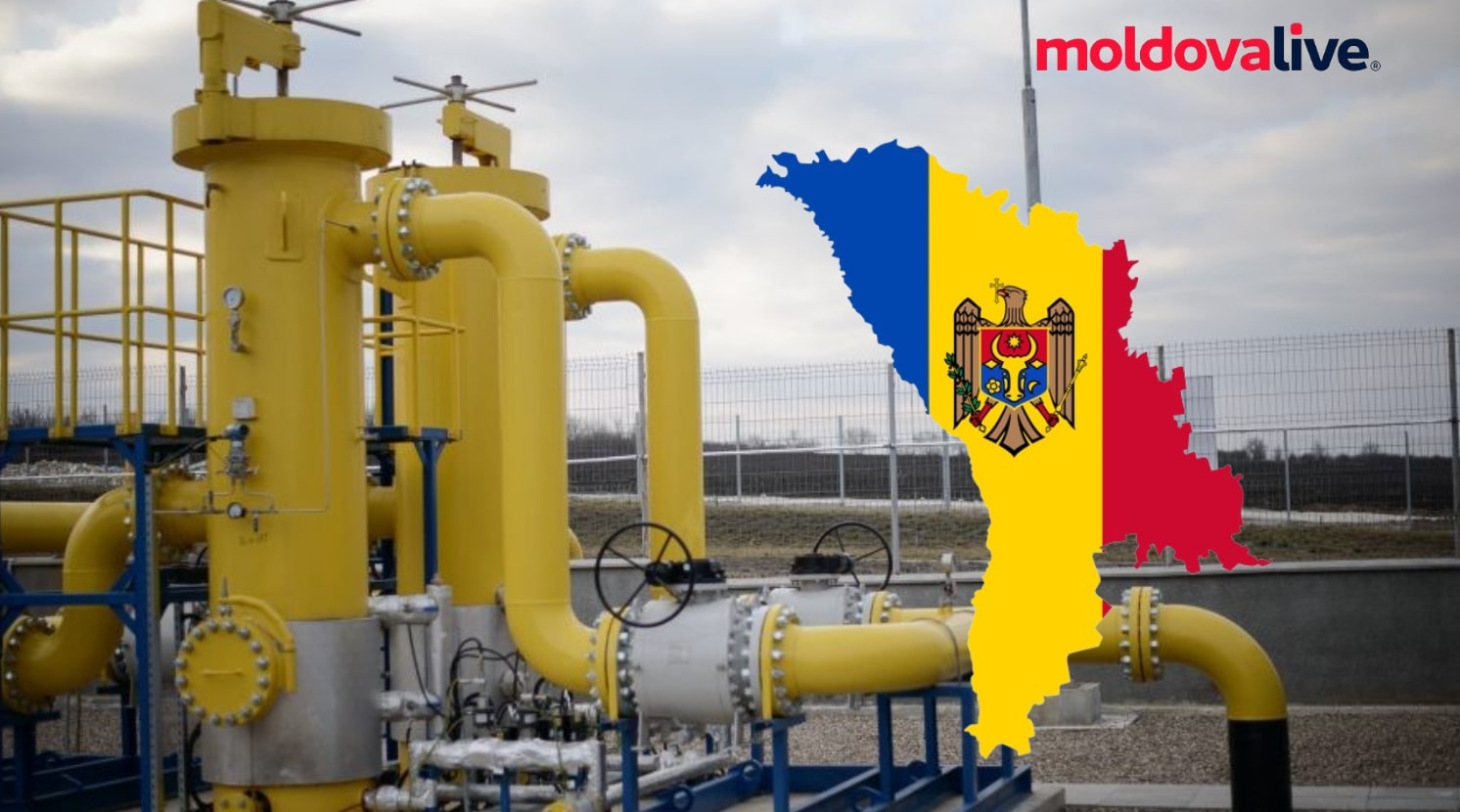
Natural gas tariffs in the Republic of Moldova could be revised again by the end of the year, but there is currently no certainty about whether prices will rise or fall. Alexei Taran, Director General of the National Agency for Energy Regulation (ANRE), says another adjustment will depend on international market prices, the war in the Middle East and temperatures this winter, Moldova 1 reports.
The official assures that the agency will intervene, including to reduce the tariff, if the conditions set out in the calculation methodology are met.
Another tariff adjustment over the next two and a half months cannot be ruled out, given that the Republic of Moldova depends on energy imports. Asked whether gas prices would remain unchanged until the end of the year, Alexei Taran explained that the international situation is too unpredictable to provide such guarantees.
“It is very difficult for us to give assurances, given that we are a small country that does not produce gas and only consumes it. We can see that this year has been extremely volatile, with none of the forecasts proving accurate. We have these conflicts in the Middle East, the war in Ukraine is continuing, and there have been developments throughout the year that have changed the situation in ways that could not have been predicted,” the ANRE director said during the Pe Față programme on Moldova 1.
The evolution of tariffs will also depend on how cold it gets in the coming months. A harsh winter could increase gas consumption and, consequently, put additional pressure on prices, while milder temperatures could reduce demand. Meanwhile, ANRE will monitor procurement costs and assess whether there are grounds for another tariff decision.
“At this moment, we cannot give any guarantees as to whether we will intervene or not. The methodology and the Agency do indeed monitor forecasts and procurement arrangements. When intervention becomes necessary and the methodological thresholds are met, whether for an increase or a decrease, the Agency will certainly intervene,” Alexei Taran said.
Could Long-Term Contracts Bring Cheaper Gas?
Signing medium- or long-term gas procurement contracts at fixed prices could provide greater predictability, but such agreements are difficult to negotiate under current market conditions. The idea was previously supported by Prime Minister Vasile Tofan, who suggested that Energocom should push for agreements that would reduce dependence on exchange market prices.
However, the ANRE director explained that a contract signed for several years does not automatically guarantee a stable price if that price is recalculated periodically.
“Long-term contracts secure supplies over the long term, but our problem is not volume — it is price. We can find the volumes we need. If these contracts, whether for one year or several decades, have a pricing condition based on monthly indexation, then we will still end up paying the same market-linked price, which will change every month,” Taran explained.
One example cited by the official is the contract with Gazprom, which remained in force for 20 years, until the end of September 2026. Despite its long duration, the agreement provided for periodic price indexation. Consequently, during the 2022 energy crisis, the tariff for consumers in the Republic of Moldova reached nearly 30 lei per cubic metre.
According to the ANRE director, the fundamental difference lies not in the duration of the contract but in the formula used to determine the price.
Securing fixed prices would require more complex negotiations and the buyer to assume commercial obligations. Suppliers might have to guarantee the purchase of predetermined quantities over periods of 10–15 years, with the risk of paying penalties if they fail to meet their commitments.
Alexei Taran believes such contracts are possible, but harder to secure at a time when gas producers and traders are trying to protect themselves against market fluctuations.
“I am not saying it is unrealistic, but I am saying that, at the moment, it is more difficult to find such contracts on the market. They can therefore only emerge from certain negotiations, discussions at the political level, or commercial negotiations which, on the other hand, must also ensure certain conditions for you as the buyer,” the ANRE director noted.
As of October 1, household consumers in the Republic of Moldova have been paying 26.14 lei per cubic metre of natural gas, including VAT, compared with 20.30 lei previously. The increase of 5.84 lei, equivalent to nearly 29%, was approved by ANRE on September 28.
The decision was driven by higher gas procurement costs for the final three months of the year, amid tensions in the Middle East and rising prices on international markets.
The Republic of Moldova depends on natural gas imports, meaning that fluctuations in external prices directly affect supply costs and, consequently, the tariffs paid by consumers.