



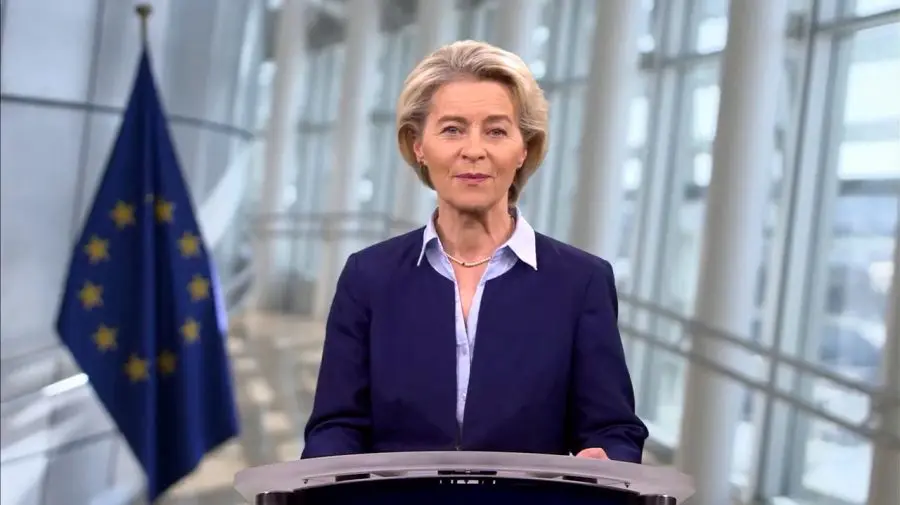
European Commission President Ursula von der Leyen unveils the main elements of the European Union’s 21st sanctions package against Russia. The proposed measures target Russian combatants who fought in Ukraine, who would face entry bans into the EU, along with additional restrictions on vessels linked to Russia’s shadow fleet, banks, and cryptocurrency-related companies.
She says the EU designs the new sanctions to hit sectors where they can have the strongest impact: energy, financial services and crypto assets, and trade. For the first time, the package also includes companies operating in the fisheries sector.
“We continue targeting the shadow fleet. Today, we propose listing another 30 vessels in addition to the 632 already sanctioned. For the first time, we also target vessels that assist the shadow fleet by providing services,” von der Leyen says. She also proposes restrictions on ports, airports, refineries involved in Russian oil trade, and limits on LNG tanker sales to Russia.
She adds that the EU expands transaction bans to cover 31 Russian banks, as well as 20 banks, companies, crypto platforms, and oil traders from third countries that help sanctioned entities bypass restrictions. She also introduces, for the first time, the possibility of a full ban on crypto-related services in third countries.
The package includes new export restrictions on materials and technologies used by Russia’s military industry, including metals and alloys for aerospace and defense, drone support equipment, and electronic warfare systems. It also targets imports of automotive components and certain ores and metals.
Von der Leyen also proposes stricter trade measures on fish products, including a full ban on some categories such as cod, and aligns restrictions with Belarus to prevent it from being used as a transit route for Russian trade.
After the European Commission presents the proposal, EU member states in the Council of the European Union must approve it. The sanctions enter into force after publication in the Official Journal of the European Union.