


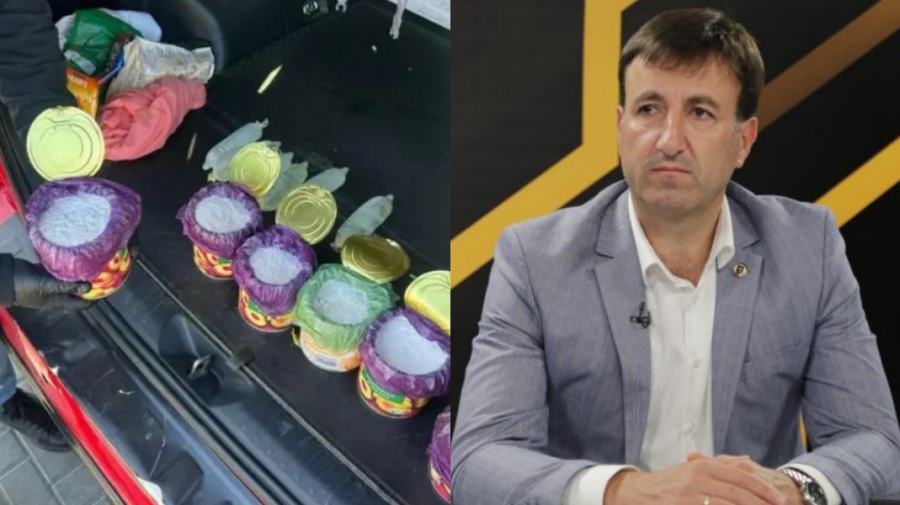
The Head of the National Police, Viorel Cernauteanu, said on public radio that drug production laboratories have not operated in the Republic of Moldova, contrary to perceptions circulating in the public space. He stated that authorities monitored any attempts to establish such laboratories from the stage of intent for about three years. Law enforcement carried out this monitoring in cooperation with international institutions such as Europol and Eurojust, as well as with prosecutors, the Border Police, and the National Police.
Authorities intervened as soon as individuals attempted to put these structures into operation and applied measures on all fronts to stop the process. Viorel Cernauteanu stressed the importance of avoiding interpretations that suggest drug production laboratories functioned in the Republic of Moldova.
At the same time, he acknowledged the existence of drug transit and trafficking on the country’s territory. According to the data presented, authorities have initiated more than 1,213 criminal cases related to drug offenses this year alone, excluding misdemeanor cases.
The head of the police explained that an increase in documented cases does not automatically mean a rise in the number of drug users. He compared the situation to other crimes, such as domestic violence, where lower figures in the past resulted from underreporting rather than the absence of the phenomenon. According to Cernauteanu, people now communicate more with authorities and feel less fear when reporting incidents, which leads to more comprehensive documentation of offenses. He said the same trend applies to drug-related crime, where higher figures partly reflect intensified enforcement.
Cernauteanu described drug-related crime as a dangerous phenomenon and emphasized the need for a joint response. In this context, authorities have strengthened cooperation with the Ministry of Health and the Ministry of Education. He warned that posting information on social media about drug hiding places or distribution does not suffice and urged citizens to inform the police immediately so they can intervene quickly and identify those involved.
Regarding methods of bringing drugs into the country, the head of the National Police said traffickers use increasingly sophisticated techniques, including concealment in electric motors, canned goods, and other objects. He noted that authorities discovered several large seizures, amounting to tens of kilograms, in parcels shipped from abroad, both from Ukraine and from European Union states.
“We proposed several legislative amendments related to drug importation into the Republic of Moldova, after identifying multiple methods of introduction, including electric motors, canned goods, and condoms filled with liquid to imitate the sound of liquid inside cans. In the most recent major seizures, seven or eight large cases involving tens of kilograms, authorities also found drugs in canned goods transported in parcels from abroad by carriers. We launched a process to establish appropriate mechanisms,” Cernauteanu said.
On drug sales via Telegram, Viorel Cernauteanu said authorities sent hundreds or even thousands of requests to the platform’s administration, asking it to close channels and identify administrators. He noted that while some channels close, networks quickly migrate, which requires constant adaptation of countermeasures. He also said authorities have received no responses from the platform’s administration.