



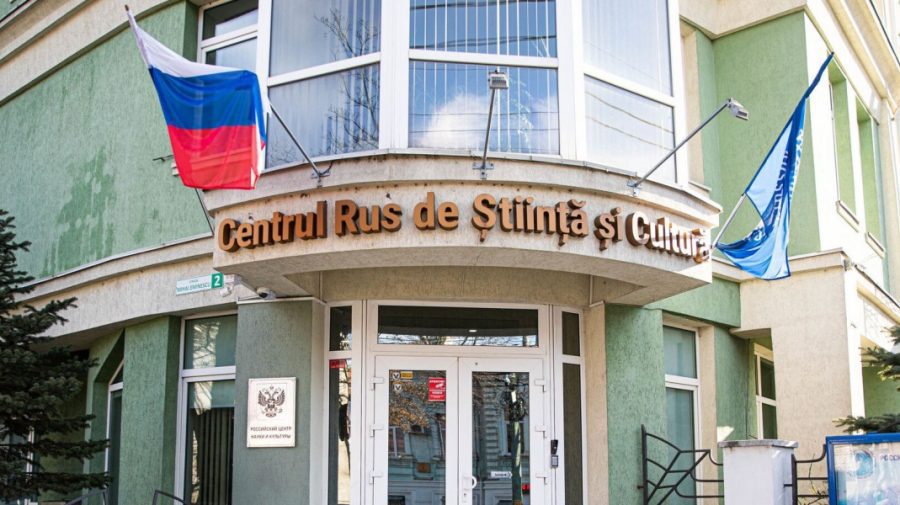
The separatist authorities in Tiraspol do not rule out opening a Russian House on the left bank of the Dniester after the closure of the one in Chisinau. Transnistria’s self-proclaimed foreign minister, Vitaly Ignatiev, made the statement.
“The leadership of the Republic of Moldova has decided to sever cultural and humanitarian ties with Russia. We believe we should finally resolve the issue of opening a fully operational Russian House in Transnistria for broad cultural and humanitarian cooperation between Russia and Transnistria. This decision will help us counter destructive attempts to limit Russia’s presence,” Ignatiev said.
Moldova’s Minister of Culture, Cristian Jardan, told journalists that the institution in Chisinau will continue operating until July 4. He said he was unaware of Tiraspol’s intention to open a Russian House in the region but described such a move as “unfriendly.”
“According to the agreement signed many years ago, they are allowed to operate. We do not know what activities they carry out. We have never maintained a relationship with them,” Jardan said, referring to the Russian Cultural Center in Chisinau.
In this context, the culture minister claimed that the institution in Tiraspol recruits young people to study in Russia. He said he would not recommend pursuing such opportunities because of the risk of becoming involved in the war.
Deputy Prime Minister for Reintegration Valeriu Chiveri stressed that any such center must operate on the basis of a bilateral agreement. According to him, opening such an institution without a corresponding agreement would violate international law.
“It does not align with the spirit of international relations and international law. Therefore, we do not believe this would benefit cooperation between Moldova and Russia,” Chiveri told reporters.
In February, Moldova’s Ministry of Foreign Affairs announced that it would unilaterally terminate the intergovernmental agreement with the Russian Federation on the establishment and operation of cultural centers, signed in 1998. The ministry made the decision after several Russian drones fell on Moldovan territory and communicated it to Russia’s ambassador to Chisinau, Oleg Ozerov, whom officials urgently summoned following another violation of Moldova’s airspace.