



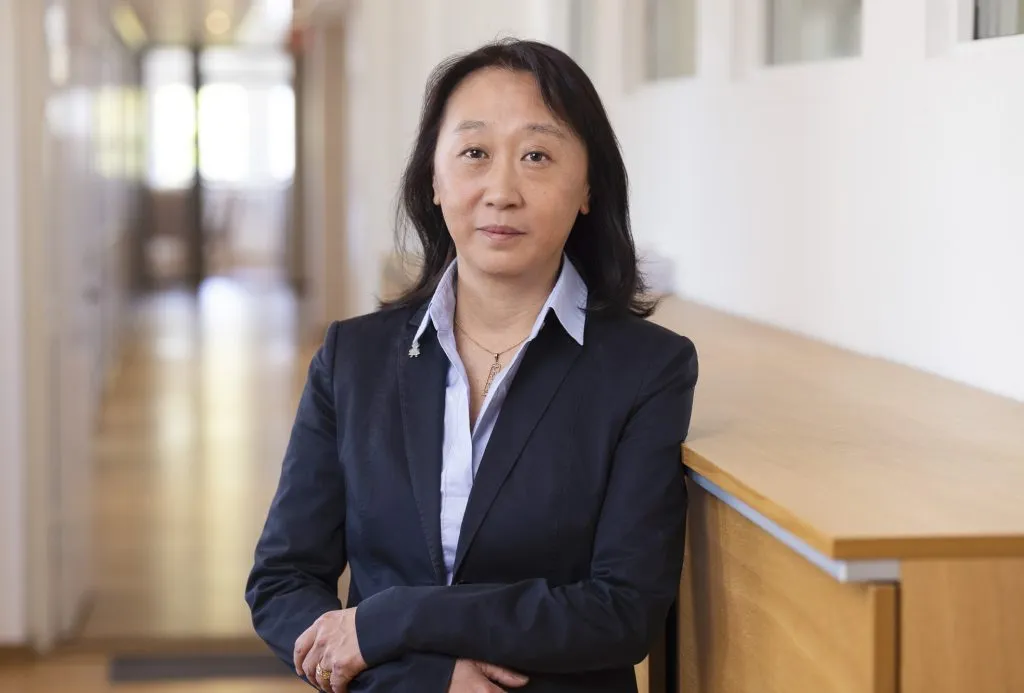
Kajsa Johansson, Honorary Consul of the Republic of Moldova in Malmö since May 2025, told to moldovalive.md about her mandate, the newly launched partnership with some Moldovan companies, and what the closer ties between Sweden and Moldova look like on the ground.
Ms. Johansson, you have been Moldova’s Honorary Consul in Malmö for over a year now. What does this mandate mean to you?
Kajsa Johansson: It’s a mandate I take very seriously, even though it’s an honorary, unpaid role. The Consulate was officially inaugurated on 3 May 2025, at a reception that brought together regional officials from Skåne and institutional partners. It was a meaningful moment for me, because I took on this role near the end of the tenure of the then Ambassador, Liliana Guțan, the architect of the Embassy’s “FromAid2Trade” strategy — the idea that Moldova’s relationship with the Nordic countries should move from humanitarian aid toward a genuine economic partnership, between equals.
The results of that strategy, over her more than two-year tenure (2022–2025), speak for themselves: Sweden became an important destination for Moldovan organic apple exports, over 100 Moldovan officials and entrepreneurs took part in Swedish training programmes on the European market organised by the National Board of Trade Sweden, and the Riksdag established a broad parliamentary friendship group dedicated to relations with Moldova — 25 members of parliament from 6 parties, dedicated to the relationship with Moldova. Sweden has been a strong supporter of Moldova’s European integration and reform agenda, including during the Swedish Presidency of the Council of the EU in 2023. It’s a strong legacy, and my role here in Malmö is to carry that same philosophy forward at a regional level — this time with a company like BPM.
Why Malmö, and why the south of Sweden?
K.J.: Because the Skåne region — with Malmö and Lund — is no ordinary province. We’re part of the Öresund region, a unique cross-border economic area in Europe, connected directly to Copenhagen by the bridge. Lund is home to world-class research centers, and Malmö has undergone a major economic transformation, with growing strengths in innovation, sustainability, life science and technology. For a company like BPM, southern Sweden isn’t just a market — it’s access to expertise and networks you won’t find everywhere.
You recently began a cooperation with BPM PC Strand, Moldova’s only manufacturer of prestressed concrete strand. How did this partnership come about?
K.J.: I found a company that was genuinely committed to long-term development and continuous improvement. BPM already exports 100% to the EU and the US, meets European standards EN 10138-3 and ASTM A416, is backed by the EBRD, and is among Moldova’s top taxpayers. It’s central that BPM is suppling products to entities of Consolis Group — a company headquartered in Sweden, active in Lithuania, Latvia, Romania, and Poland — which shows BPM already has a concrete track record on the Swedish and European market, not just stated ambitions. What caught my attention was their genuine openness to adopting concrete Swedish practices. We had a very thorough agenda discussion – eight areas of cooperation, in fact – and each one has a measurable next step.
Could you walk us through the eight areas?
K.J.: Gladly.
First, and I think the most natural starting point for Sweden: circular economy and waste management. Sweden is recognised for high levels of waste recovery and circular-economy practices — this is an area where we can make a concrete contribution. For BPM, that means piloting the recovery of metal waste as certified raw material with documented origin.
Second: traceability and responsible sourcing – adopting due diligence standards across the supply chain, based on the Swedish and EU model, with independent auditing.
Third: green energy. BPM is planning a second production line, and we’re discussing powering it from renewable sources — solar panels, energy efficiency. In fact, the company already has a 900 kW rooftop solar installation, with a 12 MWh storage system planned, which shows we’re not starting from zero.
Fourth: fiscal transparency and corporate governance — BPM is among Moldova’s top taxpayers, and we’re discussing an annual sustainability report along Swedish lines, inspired by CSRD principles.
Fifth: dual education. While Sweden does not have an extensive apprenticeship system like some central European countries, it benefits from strong vocational education programmes and close collaboration between industry and educational institutions. We’re considering a pilot with a technical school in Chișinău — scholarships and paid internships at the plant.
Sixth: inclusion — the participation of women in industry and the employment of Ukrainian refugees. This is a topic that resonates strongly here in Sweden, and it connects directly with the dialogue BPM has already started with UNHCR Moldova.
Seventh: workplace safety, through a strong workplace-safety culture inspired by Swedish approaches to risk prevention and continuous improvement — zero accidents as the standard, not just an aspiration.
And eighth, which ties all of these together: my visit to Chișinău, this October.
Let’s talk about that. What’s next in October?
K.J.: I will visit the BPM plant in Chișinău from 1 to 3 October. It will be the occasion to officially launch the joint best-practices programme we’ve outlined together — not just a courtesy visit, but the concrete start of everything we’ve discussed: waste, energy, education, safety.
You also have a professional career separate from your consular mandate. How do the two connect?
K.J.: I work as Chief People & Sustainability Officer at Motum, one of Sweden’s leading independent groups in the elevator and automatic door industry. Sustainability is a core principle there — our philosophy is to modernise existing equipment rather than replace it entirely, which is exactly the circular-economy logic I’m proposing for BPM as well. I’m not coming into this from outside the industry with abstract ideas — I come from a company that applies these principles every day.
A final thought for readers in Moldova?
K.J.: I don’t want to promise big, vague partnerships. I want measurable results, step by step — and I believe that’s exactly what we’re building now with BPM.
But I’ll be honest: BPM is a starting point, not the destination. This isn’t the first time Chișinău has opened its doors to me — back in May 2025, I took part in official events there at the invitation of the Swedish Ambassador to Moldova, Katarina Fried, shortly after the Consulate’s inauguration. That experience showed me how much appetite there is, on both sides, for something more structured than one company at a time.
So my ambition going forward is simple: I want to work with as many Moldovan companies as are genuinely ready to engage — not just BPM. I see my role at Malmö less as a ceremonial title and more as a working desk: a place where Moldovan businesses can find a door into southern Sweden, and where Swedish expertise — on the circular economy, green energy, workplace safety, whatever the need — can find its way to Moldova. If this October’s visit to Chișinău goes the way I expect, I’d like it to be the first of many, not a one-off. See you there.