



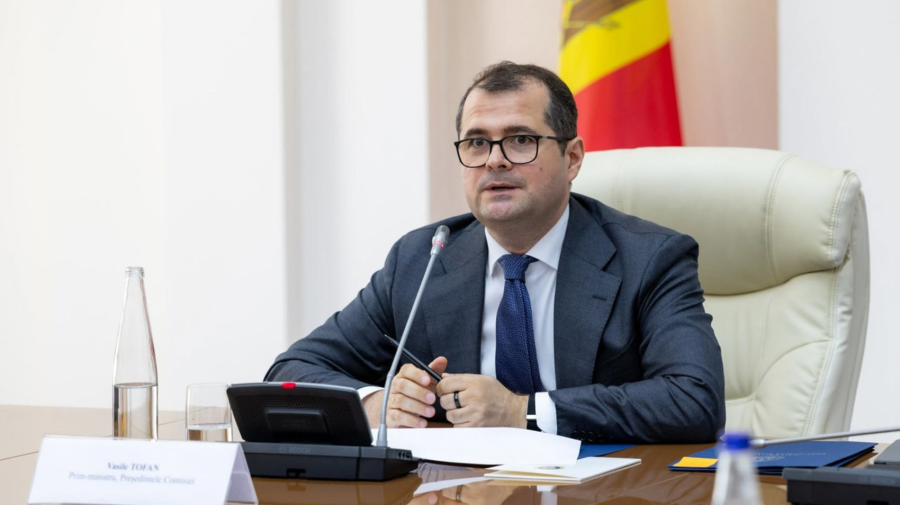
A strong and free press, along with effective security services, contributed to the victory of pro-European and pro-democracy parties in Moldova’s elections despite alleged Russian interference, Prime Minister Vasile Tofan said. He described the experience as one of the lessons Moldova can offer other countries facing propaganda and external pressure.
“I am so proud that our country managed to withstand it, despite the fact that it was a kind of David versus Goliath fight,” Tofan said in an interview with CNN journalist Jim Sciutto on the sidelines of the UN General Assembly in New York.
The prime minister said Russia had attempted to destabilize Moldova during the election, including by investing hundreds of millions of dollars in such efforts. Despite this, he said, pro-democracy and pro-European parties won the election.
“We won the elections in a free, democratic electoral system, and Russia tried to destabilize our country. It threw hundreds of millions of dollars at it, and still, pro-democracy, pro-European parties have won,” Tofan said.
Asked by Sciutto what Moldova’s “secret” was and what other countries could learn from its experience, Tofan pointed to a combination of factors. First, he highlighted the media.
“It is important to have free and strong media, and in Moldova we have advanced quite a lot in terms of media freedom,” he said.
Tofan also said authorities need to understand the tools that can be used to influence society and elections and have institutions capable of responding to such efforts.
“It is important not to be too naive about the tools that are being used. That is why we need very strong security services, and Moldova has them,” he added.
In the same interview, the prime minister said Moldova’s experience in countering propaganda and alleged Russian interference could serve as an example for other countries.
“I think Moldova is a sort of laboratory for how to resist this Russian informational aggression,” Tofan said.
Moldova’s most recent parliamentary elections were held on September 28, 2025. According to the Central Electoral Commission, voter turnout was 52.24%, with 1,609,579 voters participating. The Action and Solidarity Party (PAS) won 55 of the Parliament’s 101 seats, securing a parliamentary majority.