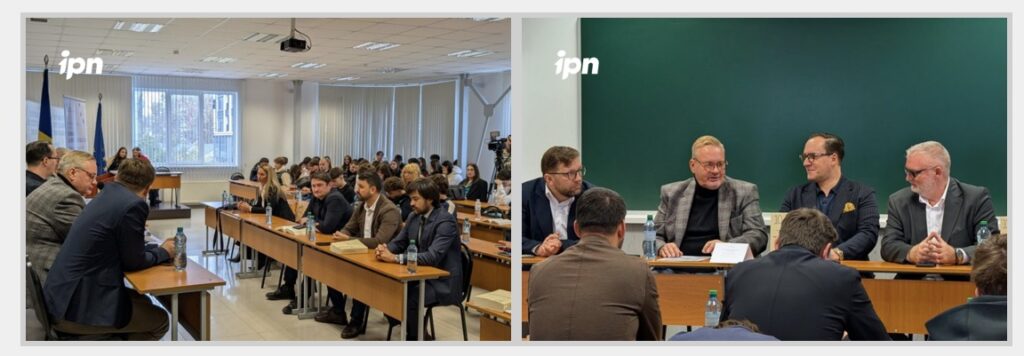
Relations between the Republic of Moldova and Romania have moved beyond linguistic, historical and cultural ties, becoming increasingly strengthened through joint projects in energy, the economy and infrastructure. This was stated by Andrei Stoian, one of the coordinators of the volume “Romania and the Republic of Moldova: The Partnership for the EU”, launched in Chișinău on Monday.
According to him, Moldova’s European integration is already taking place across several sectors, even before the country’s formal accession to the European Union, IPN reports.
Andrei Stoian explained that this closer cooperation is particularly visible in the energy sector, through interconnections between the two countries, including the Iași–Ungheni–Chișinău gas pipeline.
Other examples include Moldova’s accession to the European SEPA payment system and the introduction of roaming facilities, which allow citizens to access more affordable services.
Stoian also emphasised the importance of Romania’s experience in the EU accession process, which could help Moldova avoid some of the mistakes made by Bucharest.
He said the publication examines bilateral cooperation in the economic, cultural, infrastructure and security sectors. It is intended for readers on both banks of the Prut River, as well as students and policymakers.
“Ultimately, it is a tool for measuring the distance between political promises and concrete results,” Andrei Stoian said.
Victor Vevera, the other coordinator of the volume, noted that the linguistic and cultural ties between the two countries have expanded into the fields of energy and infrastructure.
According to him, the contributions from the authors provide a comprehensive picture of bilateral cooperation and Romania’s support for Moldova’s European integration path.
“Romania and the Republic of Moldova: The Partnership for the EU” comprises six chapters covering accession negotiations, relations between Bucharest, Chișinău and Brussels, energy and economic interconnections, democratic resilience, the Transnistrian issue and public opinion in the Republic of Moldova.
Among the contributors are Moldovan National Bank Governor Anca Dragu, European Parliament Vice-President Victor Negrescu, Moldova’s Ambassador to Romania Mihai Mîțu, and President of the Academy of Sciences of Moldova Ion Tighineanu.
The publication is the tenth volume in the Club Romania Documentary Notebooks series and can be downloaded free of charge from the Romanian Development Review website.