



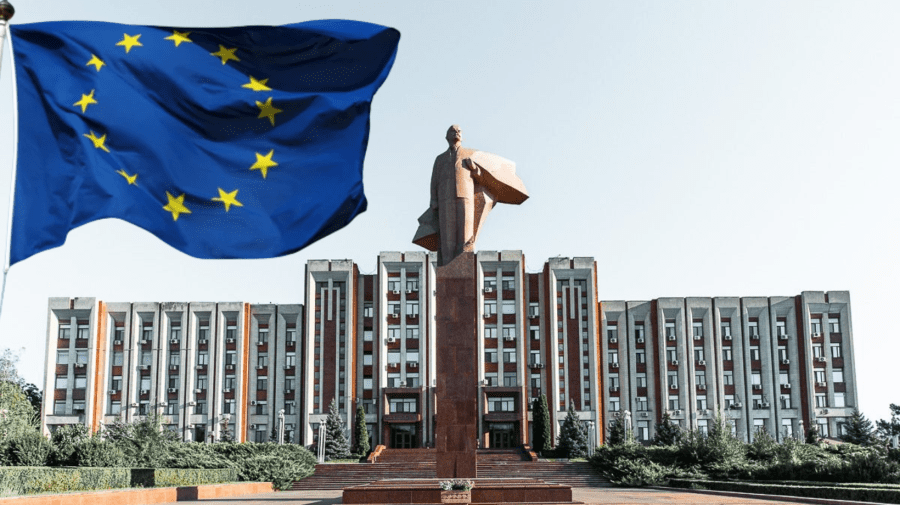
The European Union supports the approach of the Republic of Moldova regarding the country’s reintegration, Deputy Prime Minister Valeriu Chiveri said after his official visit to Brussels last week.
Valeriu Chiveri stated that he discussed the reintegration process with European officials, including Enlargement Commissioner Marta Kos, and reviewed the actions taken by the Moldovan government to advance it, including new ideas and elements. He also pointed to existing obstacles, such as the presence of Russian troops on the left bank of the Dniester River and the war in Ukraine.
Valeriu Chiveri said, “Cooperation with European partners plays an important role in supporting the efforts of authorities in Chisinau to reintegrate the country and create conditions for economic development. This cooperation helps maintain peace and stability in the region, including by ensuring energy resources, and demonstrates our partners’ commitment to the well-being of all citizens of the Republic of Moldova, on both the right and left banks of the Dniester River.
As you know, the offer from the government in Chisinau, supported by European partners, has not yet been accepted by Tiraspol. (…) Our partners provide this support with full respect for the sovereignty and territorial integrity of the Republic of Moldova within its internationally recognized borders. We see an understanding and encouraging attitude from our partners, and I personally felt openness toward our approach in the reintegration efforts.”
The deputy prime minister also confirmed the authenticity of the document that appeared in the public space last week and outlined a series of reintegration actions, but he stressed that it is not an official program. He explained that it represents a vision designed to initiate discussions with partners. He emphasized that the Republic of Moldova holds responsibility for reintegration and that dialogue with the European Union does not shift this responsibility to EU member states.