



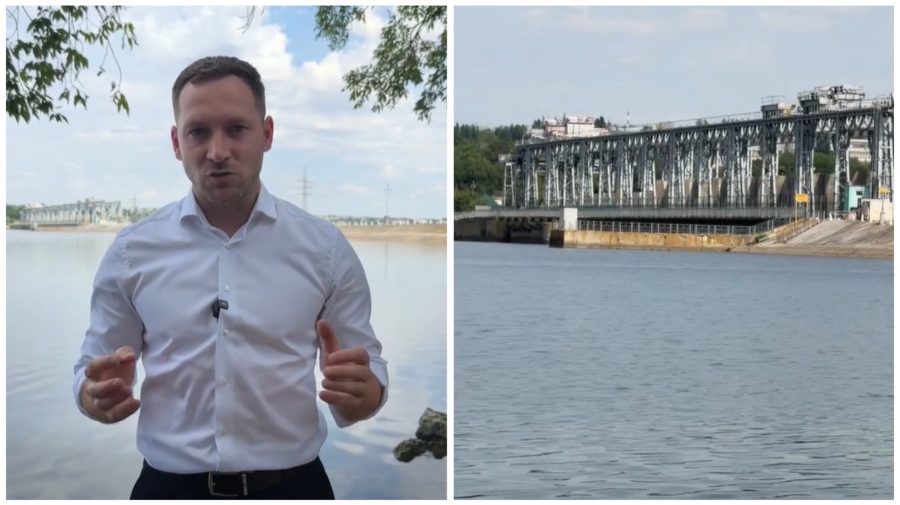
The situation on the Dniester River is deteriorating, and maintaining the current water flow from Ukraine could soon become extremely difficult, Environment Minister Gheorghe Hajder warned.
According to the minister, the seemingly stable water level of the Dubasari Reservoir should not create the impression that the crisis has been overcome. Moldova has so far managed to negotiate with Ukraine to maintain a flow of 75-85 cubic meters per second, which has helped stabilize the reservoir.
However, Dubasari depends on water flowing from upstream, and the situation at Ukraine’s Novodnestrovsk Reservoir is considerably more difficult.
Water Levels Falling in Ukraine
Hajder said the water level at Novodnestrovsk fell by approximately one meter in July and by another meter by August 25. By the end of August, the decline could reach 1.25-1.30 meters.
The amount of water flowing into the reservoir has also dropped significantly.
Over the past eight days, the average inflow has fallen to 22.38 cubic meters per second, compared with approximately 38 cubic meters per second at the beginning of August. On one day, the inflow dropped to just 14 cubic meters per second.
According to Hajder, more water has been released from the Novodnestrovsk Reservoir than has flowed into it in order to maintain the Dniester’s downstream flow and stabilize the water level at Dubasari.
As a result, the available water reserves are declining rapidly.
“It will be extremely difficult or almost impossible to maintain even the current discharge rate,” Hajder said on Tuesday, August 25.
Moldova and Ukraine to Discuss Next Steps
A new extraordinary meeting of the Dniester Commission, with the participation of Ukrainian officials, is scheduled for Friday, August 28.
The authorities are expected to discuss measures that could be implemented in the coming period in response to the deteriorating hydrological situation.
Hajder urged citizens, local authorities and businesses to use water responsibly while the hydrological crisis continues.
Moldova declared a hydrological alert on July 28 for a period of 30 days and has been monitoring the Dniester’s flow in cooperation with Ukraine.
To manage the available water resources, the two countries agreed to temporarily reduce discharges from the Novodnestrovsk Reservoir to 75 cubic meters per second until the end of August.