



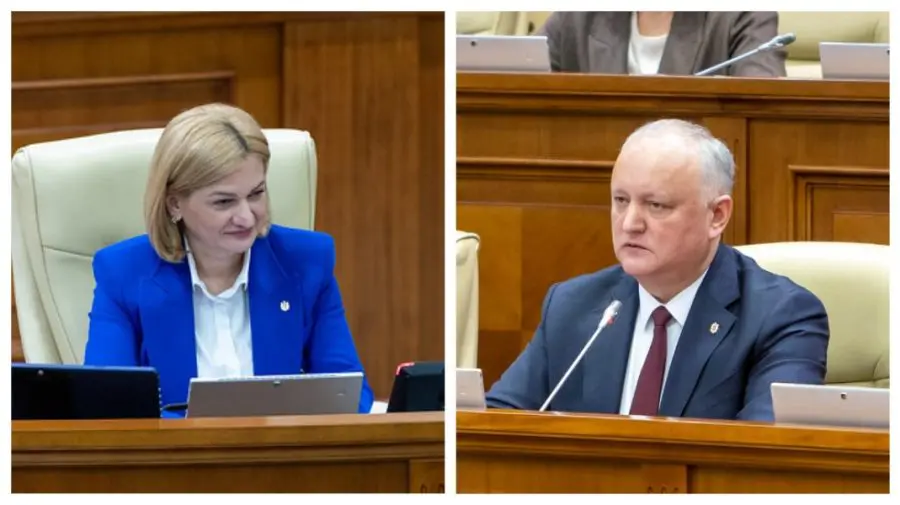
An exchange of remarks took place during a plenary sitting of Parliament between the leader of the Party of Socialists of the Republic of Moldova (PSRM), Igor Dodon, and Deputy Speaker of Parliament Doina Gherman, a PAS MP, regarding the proposal to hear Prime Minister Alexandru Munteanu 100 days after his appointment.
Igor Dodon announced the opposition’s initiative to invite the prime minister to present the Government’s results after the first three months in office. The socialist leader recalled that, at the time of his appointment, Munteanu had promised permanent dialogue with Parliament.
“Mr. Prime Minister, three months ago, from this very podium, you promised that we would be in permanent dialogue. We, the opposition, appreciated the fact that you stayed in the plenary hall for over 10 hours without a break. We propose that you come and inform Parliament about the results of your governance,” Dodon said.
He added that even if the parliamentary majority were to block the initiative, the prime minister should show “courage” and present a report. Dodon also warned that the opposition could resort to motions of no confidence and hinted at possible political changes in the spring.
The majority’s response came from Doina Gherman, who described the invitation as “inappropriate.”
“You appreciated the courage of the prime minister, but you did not vote for the Cabinet of Ministers. We consider this invitation to the plenary absolutely inappropriate. The 100-day custom is an old one and is no longer relevant,” the PAS MP stated.
Gherman emphasized that the Executive is focused on addressing citizens’ concerns, mentioning the adoption of the state budget, the granting of thermal energy compensation to more than half of households, increased funding for free school meals and kindergarten renovations, as well as progress on the European integration agenda.
The PSRM initiative did not receive the necessary support.
The 100-day report is an unofficial but widely publicized political tradition in many democracies. It originated in the United States during Franklin D. Roosevelt’s presidency in 1933 and has since been used as a benchmark for assessing a government’s initial performance.