



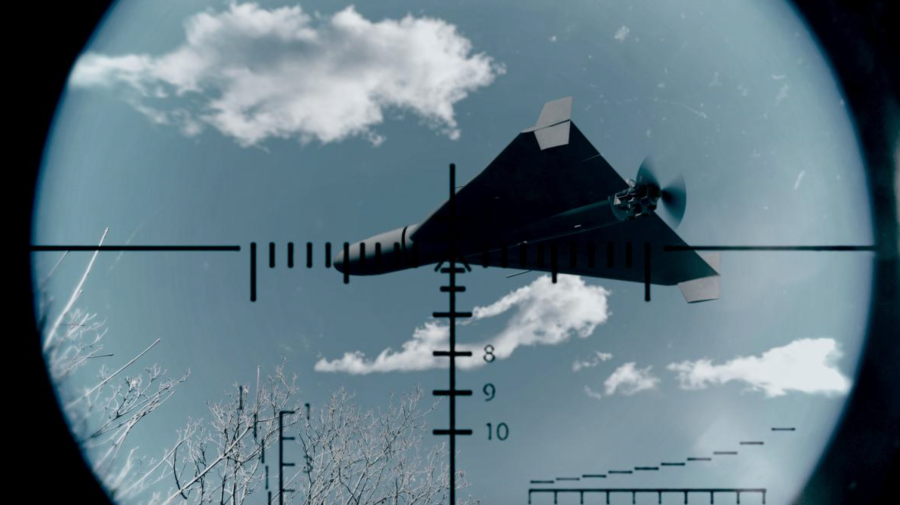
Moldova’s airspace is being violated with increasing frequency amid intensified Russian air attacks on Ukraine. Data from the Air Operations Service of the National Army show that 44 unauthorized overflights of Moldova’s airspace were recorded from the beginning of 2026 through September 24.
According to the Ministry of Defense, a total of 81 airspace violations were documented between 2022 and 2026, involving Russian- and Iranian-made missiles and drones, including decoy drones. The number of incidents has increased steadily:
- 2022 – 4 cases
- 2023 – 6 cases
- 2024 – 10 cases
- 2025 – 17 cases
- 2026 – 44 cases, through September 24
Of all the objects involved, 45 were drones, 12 were decoy drones and six were missiles. In another 17 cases, fragments of drones or missiles were identified, while one incident involved an object resembling a balloon.
The Ministry of Defense said there were more than 50 illegal overflights that did not result in an impact on the ground, 17 cases in which objects were identified on the ground without causing damage, and 13 incidents that resulted in explosions. In more than 10 cases, authorities were forced to temporarily close Moldovan airspace because of risks to civil aviation.
The incidents have been reported in virtually all parts of the country, although the highest concentration has been recorded in localities and districts near the Ukrainian border. Areas mentioned by the Ministry of Defense include localities in the Gagauzia autonomous region and the districts of Ștefan Vodă, Căușeni, Soroca, Edineț and Briceni, as well as Bălți and other localities in northern and eastern Moldova.
Authorities acknowledge, however, that not all aerial objects could be detected by the National Army’s surveillance systems. In some cases, drones and other military objects flew at altitudes that prevented existing systems from detecting and recording them.
Against this backdrop, the Ministry of Defense says investment in modern systems for monitoring, detecting and neutralizing aerial threats is essential to strengthening Moldova’s defense capabilities. According to the ministry, potential incidents causing serious damage to critical infrastructure and threatening public safety could generate costs hundreds of times higher than the investments needed to develop defense capabilities in advance.