



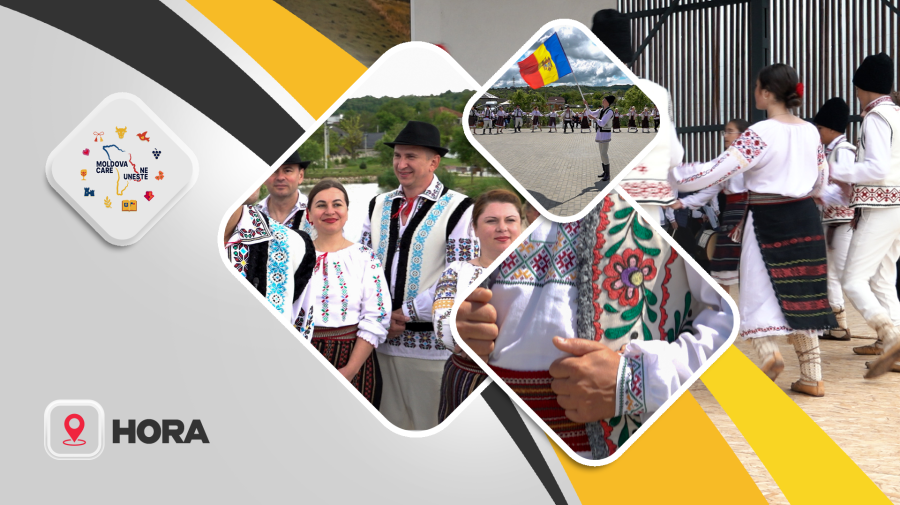
Hora is one of the oldest traditional dances in the region between the Prut and Dniester rivers. Performed in a circle, it symbolizes unity, community and togetherness. Its first documented mention dates back to 1716, in Dimitrie Cantemir’s Descriptio Moldaviae.
Over the centuries, the hora has taken on different forms and rhythms, depending on the region and the community where it was performed. Passed down from generation to generation, the dance has become an important part of major celebrations, traditions and customs.
The hora is still danced today at festivals, weddings and other important events, bringing people of all ages together in the same circle. The steps, music and joined hands transform the dance into a living symbol of identity and the bond between generations.
Moldova is more than a place on the map. Moldova is its people and the places where we feel at home — places that keep the history and culture of our people alive. They stir memories and awaken feelings of joy and longing whenever we are far from home.