



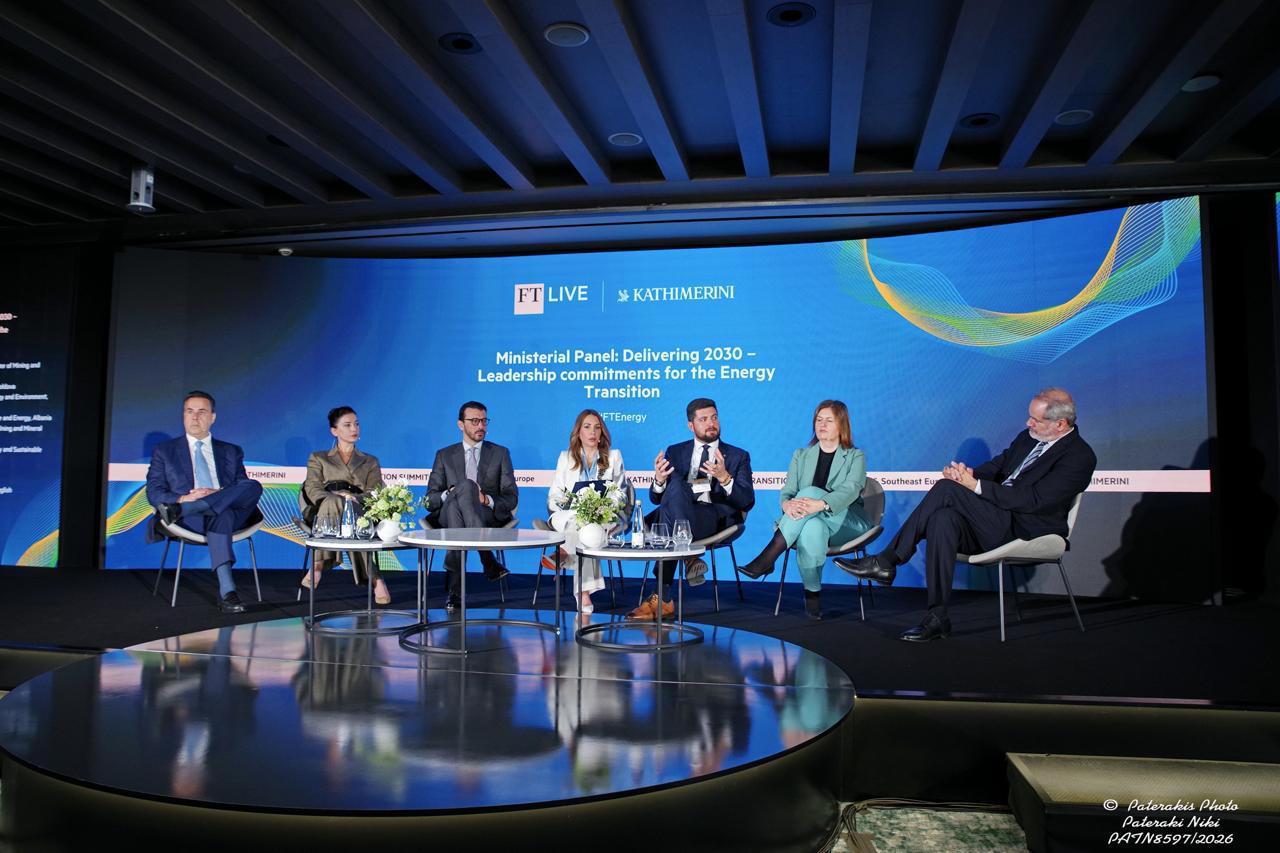
Republic of Moldova is transforming its energy system and moving toward a diversified model based on market rules and aligned with European standards. Energy Minister Dorin Junghietu stated that Moldova is now better prepared to respond to energy crises and regional volatility thanks to investments, cooperation with European partners, and reforms implemented in recent years. He made the remarks during the Energy Transition Summit organized by the Financial Times in Athens.
The minister reviewed the reforms Moldova has implemented to modernize the energy sector and move closer to the European energy market.
According to Dorin Junghietu, the completion of the 400 kV Vulcanesti–Chisinau overhead transmission line represents one of the most important energy projects Moldova has implemented in recent decades. He also stressed that progress on the Suceava–Bălți and Strășeni–Gutinaș projects will strengthen connectivity with Romania and the European energy market and will directly improve energy security and the stability of the national energy system.
At the summit, the minister said that authorities have already secured financing for all three energy interconnection projects with Romania and that the projects are currently at different stages of implementation.
He also referred to the secondary 330 kV Bălți–Dnestrovsk line, which the European Union included in its Growth Plan and in the list of Projects of Energy Community Interest. According to the minister, the line will add around 500 MW of cross-border capacity, strengthen the resilience of the energy system, and facilitate the integration of renewable energy sources.
Dorin Junghietu also highlighted the development of green energy and investments in modern energy storage capacities.
“In just five years, we increased installed renewable energy capacity 13-fold and surpassed the 1 GW threshold. This clearly shows that Moldova can build a modern energy system that depends less on external energy resources,” the minister stated.
He added that renewable energy already generates almost a quarter of Moldova’s electricity production and that competitive tenders organized by the state have accelerated the development of photovoltaic and wind projects, as well as investments in storage capacities.
Regarding the security of natural gas and oil product supplies, the minister said that Moldova has secured access to multiple European supply routes through interconnections with Romania, the use of the Trans-Balkan Corridor, and access to regional storage facilities.
Participants at the summit in Athens discussed energy objectives through 2030, the development of regional infrastructure, accelerating the green transition, and strengthening energy security in Southeastern Europe and the wider Black Sea region.