



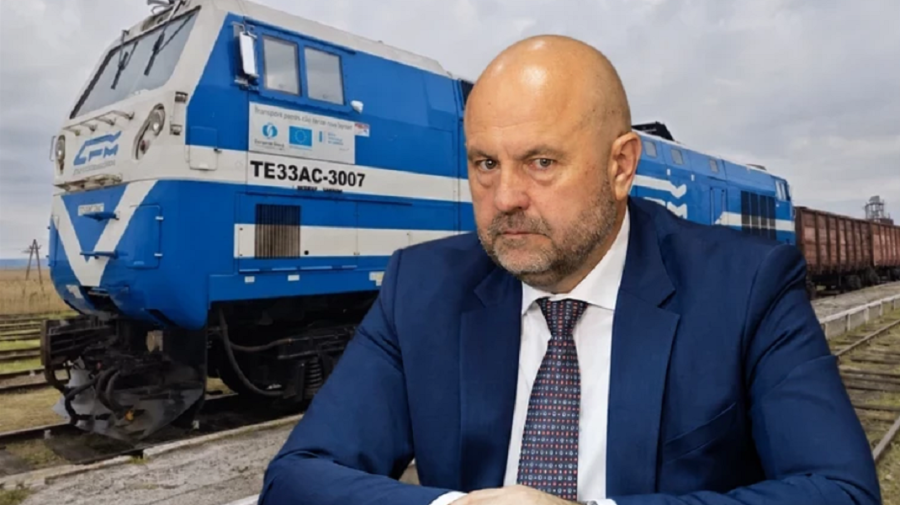
The Republic of Moldova needs to develop a metropolitan train network to reduce traffic congestion and improve people’s access to public transport. The issue is already being discussed with French authorities, Deputy Prime Minister Vladimir Bolea, Minister of Infrastructure and Regional Development, said on the Bună Dimineața programme on Moldova 1.
According to the official, developing public transport is one of the priorities set out in the new Sustainable Urban Mobility Law, which aims to reduce dependence on private cars and ease traffic, particularly in Chișinău municipality.
“The path we have chosen is to prioritise the development of public transport,” Vladimir Bolea said, noting that the authorities aim to improve infrastructure and provide more efficient alternatives for daily travel.
The minister said that by 2030, Chișinău should have dedicated public transport lanes on all boulevards. Local public administrations will also be encouraged to purchase high-capacity vehicles to improve passenger comfort and reduce traffic congestion.
According to Bolea, more than one million people come to the capital, live there, and work there every day, while the large number of cars puts considerable pressure on road infrastructure. The new law also provides for higher parking fees in the city centre and the introduction of a legal mechanism for removing cars abandoned on streets or in apartment building courtyards.
For abandoned vehicles, the authorities will have a procedure that includes identifying the owner, notifying them, and removing the car to a designated impound lot. Subsequently, following a court ruling, the vehicle may become the property of the municipality and be sold at auction. The proceeds will be directed towards investments in infrastructure and parking facilities.
Vladimir Bolea stressed that the aim of the new measures is to transform cities into more accessible spaces, prioritising public transport, pedestrians, and cyclists.