



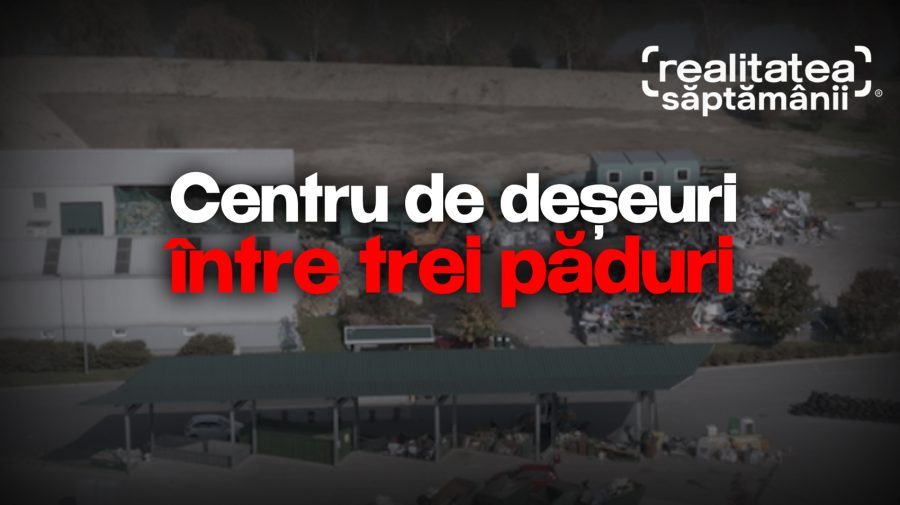
Three forests, springs, a pond, and agricultural land — this is a central region of the Republic of Moldova that locals call “the heart of the region.” Authorities could build one of the country’s largest waste management centers here. The government sees the project as a solution to the country’s waste problem. Local residents, however, believe the facility would destroy nature, pollute water sources, and, most importantly, pose a health risk.
In Anenii Noi district, near the villages of Puhaceni and Serpeni, the government plans to build a waste processing facility. Authorities promise that the center will use modern technologies and will not harm the region’s environment. Local residents disagree and are demanding that the project be stopped.
The mayor of Puhaceni village, Veaceslav Plamadeala, says residents do not oppose the need for a modern waste management system, but they object to the location chosen for the facility. According to him, authorities plan to develop the platform in an area surrounded by three forests, springs, underground water sources, and fertile agricultural land.
“Much to our surprise, the government intends to open this waste management center in an extraordinarily picturesque and beautiful location, an area with a landscape of great importance for nature. The site borders the villages of Serpeni, Speia, Puhaceni, Delacau, Dubasarii Vechi, Balabanesti, Corjova, and Cobusca Veche. All these villages are located near the land where this large waste management center is planned,” said Puhaceni Mayor Veaceslav Plamadeala.
The mayor claims that local authorities and residents were not consulted before officials began field investigations. He warns that the future center could affect the environment and local water resources.
“We were not informed or invited to consultations or meetings about whether the communities in the region accepted or rejected the opening of this waste processing center. We do not consider this approach correct — starting research without taking into account the opinions of the people who live here,” he explained.
Residents share the same concerns. They argue that such an investment should not be located near forests and agricultural land. They fear that possible leaks or runoff could reach the Dniester River and underground water sources. Some residents say they are ready to protest in order to prevent the project from moving forward.
Locals also raise concerns about public health. They claim that Anenii Noi district already records a high number of cancer cases and fear that a waste management center could worsen the situation.
“What kind of landfill can be placed near a forest? Moldova already has very few forests, and now they want to build a waste processing facility. I do not agree with this. As far as I know, there are many villages where almost nobody lives anymore, or only one person remains. There are abandoned villages — maybe that would be a solution,” said Ana Anghelcev, a resident of Puhaceni village.
“What kind of ecology is this? What kind of nature are we talking about? We plant forests, but in the end we drown our country in waste. All residents oppose this. Nobody agreed to build a landfill on the territory of our village. When heavy rains come, all that water flows into the village. I do not want that dirty water to reach my hometown. Nobody agrees with this,” said Boris Plamadeala, a resident of Puhaceni .
“People do not even have words to describe their frustration. They are absolutely against this landfill. Everyone is against it because recently we have seen many illnesses, including cancer cases, especially in our district. Our district has one of the highest numbers of cancer patients,” another resident said.
“It will be a disaster. It is outrageous. I do not believe anyone will agree to this. People are already preparing to mobilize and organize a strike because this is impossible,” another local resident said.
The local councils of Puhaceni and Serpeni, together with the Anenii Noi District Council, have asked the Ministry of Environment to suspend the procedure and reassess the decision regarding the location of the center.
Residents of Speia village have also expressed opposition. They collected more than 250 signatures against the project and submitted a petition to the Ministry of Environment.
“These signatures prove that we oppose this project proposed by them, and we are waiting for a response. The villages on this side of the Dniester are outraged. Of course, it will have an impact. We have young people, children, and elderly people who are ill. Anenii Noi district has many cancer cases, and this is because of polluted air… We have beautiful nature, and we hope this issue will be taken into consideration,” said Aliona Ceban, a resident of Speia village, Anenii Noi district.
Environment Minister Gheorghe Hajder said authorities would consult local communities and public administrations before making a final decision. According to the official, the project will comply with European standards, and authorities will carry out all legally required environmental assessments and analyses before construction begins to ensure that the impact on the environment is either eliminated or minimized.
“We will consult the local community and local authorities so that we can make the best decision and explain to everyone the benefits of this project. Our goal is to conduct the impact assessment required by law and carry out environmental analyses to ensure that the project will have no impact at all,” the minister explained.
According to the project, the regional waste management center would serve more than 1.1 million residents of Chisinau municipality and the districts of Anenii Noi, Criuleni, Dubasari, Hincesti, Ialoveni, Straseni, and Orhei.
The “Solid Waste in the Republic of Moldova” project has a budget of more than €200 million. It is financed through external loans and grants, as well as contributions from the National Environmental Fund.