



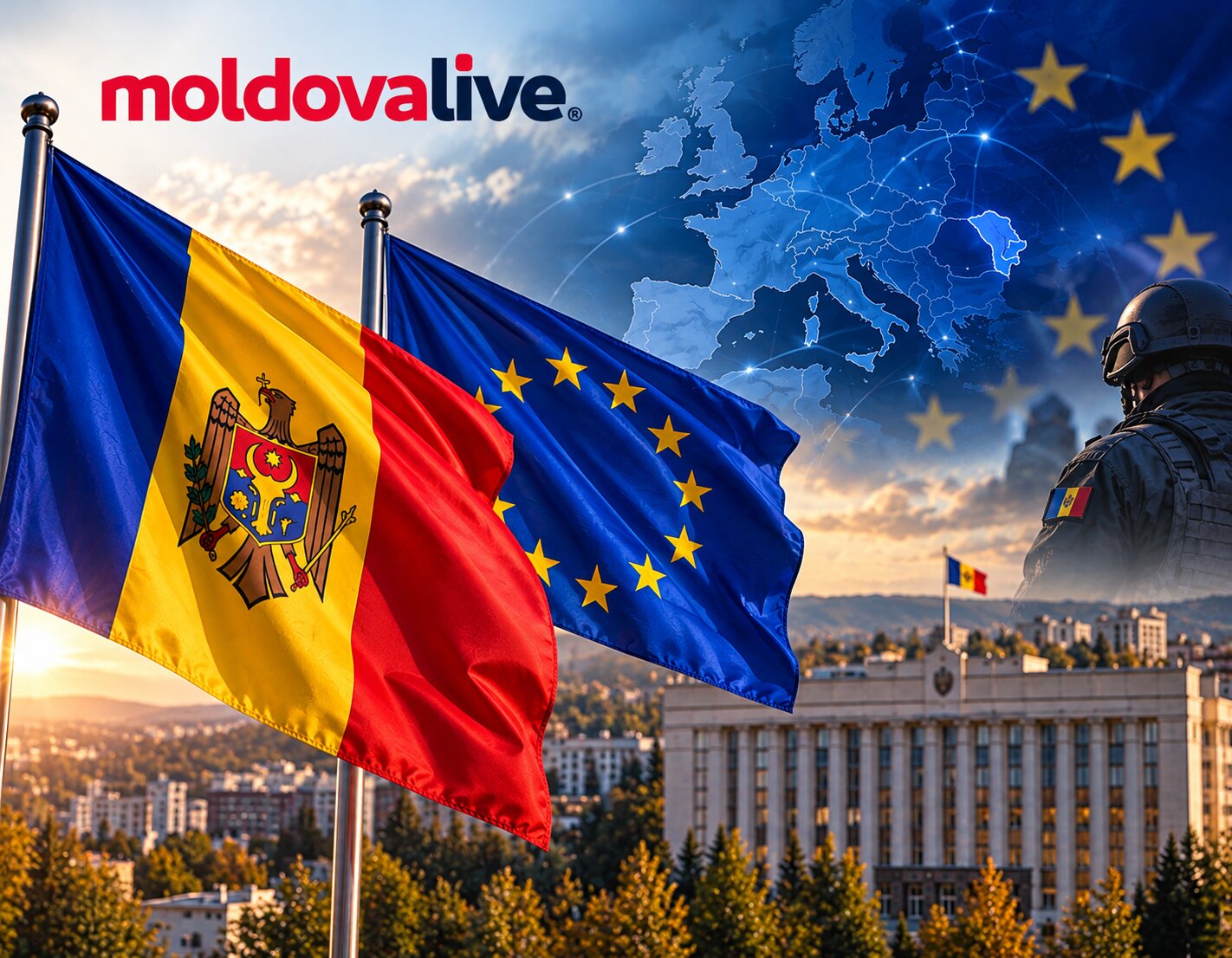
The Moldova Security Forum 2026 in Chisinau highlighted Moldova’s role in European security. President Maia Sandu said joining the European Union would give the country a stronger framework to protect itself against external threats.
Security has become a key factor shaping Moldova’s European future. Russia’s war against Ukraine, growing hybrid threats, cyberattacks and attempts to interfere in democratic processes have given European integration a strategic dimension that extends beyond politics and economic development.
These issues featured prominently at the Moldova Security Forum 2026, which took place in Chișinău on October 8–9. The event brought together more than 700 representatives of government institutions, international organisations, expert communities and the media from Moldova, European countries and the United States. Discussions focused on regional security, defence cooperation, democratic resilience and the future of EU enlargement.
European Integration as a Security Strategy
Speaking at the forum on October 8, President Maia Sandu stressed that a stronger Moldova would also contribute to a more secure Europe. She described EU membership as the country’s most reliable long-term security guarantee.
“What strengthens Moldova also strengthens Europe, and the most reliable guarantee is membership in the European Union,” Sandu said.
The president also highlighted Moldova’s contribution to European security, particularly through its support for Ukraine and cooperation with international partners. She argued that Moldova had gained valuable experience in countering hybrid threats, which could also benefit other European countries.
Chișinău therefore views European integration not only as a path towards economic development and institutional reform, but also as an opportunity to strengthen national security amid a changing regional landscape.
From Disinformation to Threats Against Critical Infrastructure
Hybrid threats remain one of Moldova’s main security challenges. These threats extend beyond military risks to include cyberattacks, disinformation, foreign interference in elections and attempts to undermine public trust in state institutions.
In her address, Sandu said Russia had used various forms of pressure against Moldova, ranging from airspace violations to information operations and interference in electoral processes.
She also highlighted the risks that the war in Ukraine posed to Moldova’s energy and water infrastructure. According to Sandu, strikes against infrastructure in Ukraine had already threatened Moldova’s water and electricity supplies.
These challenges demonstrate that modern security involves far more than military defence. It also depends on the readiness of public institutions, the resilience of critical infrastructure, the integrity of the information environment and society’s ability to resist manipulation.
For Moldova, this means strengthening state institutions, improving cybersecurity capabilities and expanding cooperation with European partners.
Why Moldova’s Security Matters to Europe
Sandu also emphasised Moldova’s role in supporting Ukraine’s security. She noted that the two countries shared a border of approximately 1,200 kilometres.
According to the president, stability in Moldova matters not only to Chișinău but also to Ukraine’s southwestern security and the European Union’s eastern flank.
Sandu said Russia had sought to turn Moldova into a “second Belarus” and use its territory against Ukraine and the EU. She argued that Moldovan voters had thwarted this scenario twice through their votes.
The president also highlighted Moldova’s humanitarian contribution. Since Russia launched its full-scale invasion of Ukraine, more than one million Ukrainians have entered Moldova, while around 100,000 have found refuge in the country.
These figures and security considerations underline Moldova’s potential role not merely as a country seeking international assistance, but as a partner capable of contributing to regional stability.
What Can Closer EU Integration Deliver in Practice?
The challenge extends beyond political declarations. Moldova also needs practical mechanisms for cooperation with its European partners.
The country already works with European partners on security and defence. During her address, Sandu highlighted the role of the European Peace Facility, which has supported the modernisation of Moldova’s defence sector since 2021. She identified air defence as the country’s most urgent priority.
Closer integration with the EU could expand Moldova’s opportunities for information-sharing, critical infrastructure protection, action against cross-border crime and cyber threats, and coordination during crises.
The forum also explored the links between EU enlargement, defence cooperation and Europe’s strategic preparedness. Participants discussed how Moldova could make use of European security and defence instruments as it continued its EU accession process.
However, European integration alone cannot eliminate every threat. Progress will depend on consistent reforms, effective public institutions and Moldova’s willingness to invest in its own resilience.
Can Moldova Become Part of Europe’s New Security Architecture?
The central question is what role Moldova can play in Europe’s evolving security framework.
Chișinău wants not only to benefit from closer cooperation with the EU, but also to demonstrate that Moldova’s stability matters to the wider region. Its experience in countering hybrid threats, support for Ukraine and participation in international initiatives could all contribute to that effort.
At the same time, Moldova must continue domestic reforms as it moves towards EU membership. Protecting democratic institutions, strengthening public trust in government and improving the country’s ability to withstand foreign interference remain essential priorities, regardless of the pace of accession negotiations.
The Moldova Security Forum 2026 highlighted the strategic link between national security and European integration. For Moldova, these are no longer separate policy tracks but interconnected elements of its long-term development.
Moldova’s European future will depend not only on the pace of its EU accession negotiations, but also on how resilient, secure, and capable the country becomes in the face of external pressure.