Producers of wines place value not only on grapes and wine but also on the history and culture of our people. Thus, some of the traditional elements found in carpets and folk clothing have been carefully selected and associated with the history and native wines. “Maini pe solduri” (Hands on Hips), “Pieptenele” (Comb), “Spirala” (The Spiral), “Soarele” (The Sun), and “Safaditele” (The Quarrelsome Ones) can be found on the labels of the most recent local wines released by Castel Mimi. You will learn more about the significance of the last three motifs below.
According to Stela Moldovanu, an expert in symbolism who was interviewed for realitatea.md, traditional symbols are universal signs present in many cultures around the world. There are symbols that appeared thousands of years ago as a way to express the connection between humans and nature and its unchanging laws. Among the most popular ones, which are also found in our culture, are the “Rombul” (The Diamond) and the “Spirala,” which have been used all over the world, not just in Romanian culture.
“Spirala” represents the energy of life. We see it in many representations in nature: galaxies, the swirl of water, it is something that starts from a point and continues indefinitely, speaking of evolution and progress, but also of the return to the primordial source of life. Due to its endless shape, the Spiral symbolizes immortality and infinity,” says Stela Moldovanu.
“Soarele,” another symbol, besides the light and warmth it provides us with every day, also signifies life.
“Without it, we could not exist; it is the beginning of creating a new day, a new path. It is the source, the spring of the world. The sun sets every evening to rise again the next day, which leads us to the permanent cycle of the universe: life-death-regeneration,” Moldovanu states.
“Sfaditele” is also found on the bottle of wine with the same name, a blended red wine made from the most representative grape varieties in our country. Varieties that, according to winemakers, are difficult to combine in the same bottle. There is also an explanation for the name on the label.
“This symbol is actually a Romanian Yin-Yang; it represents the unity of opposites, that is, the duality of life: night-day, male-female, material-spiritual. The name comes from the association with two neighbors who constantly quarrel and argue but cannot do without each other,” concludes Stela Moldovanu.
We remind you that the wine producer Castel Mimi has launched five wines from local varieties, on whose labels traditional symbols associated with the history of each wine have been imprinted. As part of the project, the campaign “Choose wines from native varieties” has also been launched, urging consumers to promote our local culture and wines.
Manage Consent
To provide the best experiences, we use technologies like cookies to store and/or access device information. Consenting to these technologies will allow us to process data such as browsing behavior or unique IDs on this site. Not consenting or withdrawing consent, may adversely affect certain features and functions.
Functional
Always active
The technical storage or access is strictly necessary for the legitimate purpose of enabling the use of a specific service explicitly requested by the subscriber or user, or for the sole purpose of carrying out the transmission of a communication over an electronic communications network.
Preferences
The technical storage or access is necessary for the legitimate purpose of storing preferences that are not requested by the subscriber or user.
Statistics
The technical storage or access that is used exclusively for statistical purposes.The technical storage or access that is used exclusively for anonymous statistical purposes. Without a subpoena, voluntary compliance on the part of your Internet Service Provider, or additional records from a third party, information stored or retrieved for this purpose alone cannot usually be used to identify you.
Marketing
The technical storage or access is required to create user profiles to send advertising, or to track the user on a website or across several websites for similar marketing purposes.



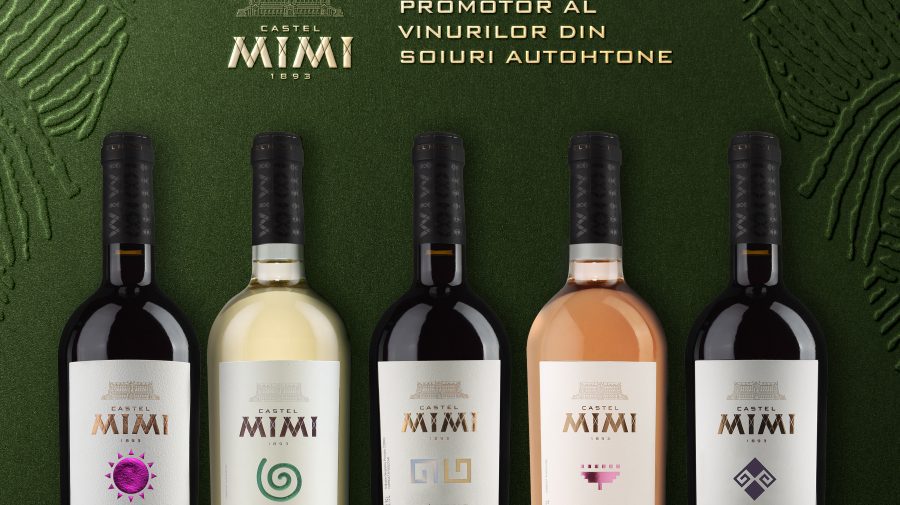



, "Pieptenele" (Comb), "Spirala" (The Spiral), "Soarele" (The Sun), and "Safaditele" (The Quarrelsome Ones) can be found on the labels of the most recent local wines released by Castel Mimi. You will learn more about the significance of the last three motifs below.)