



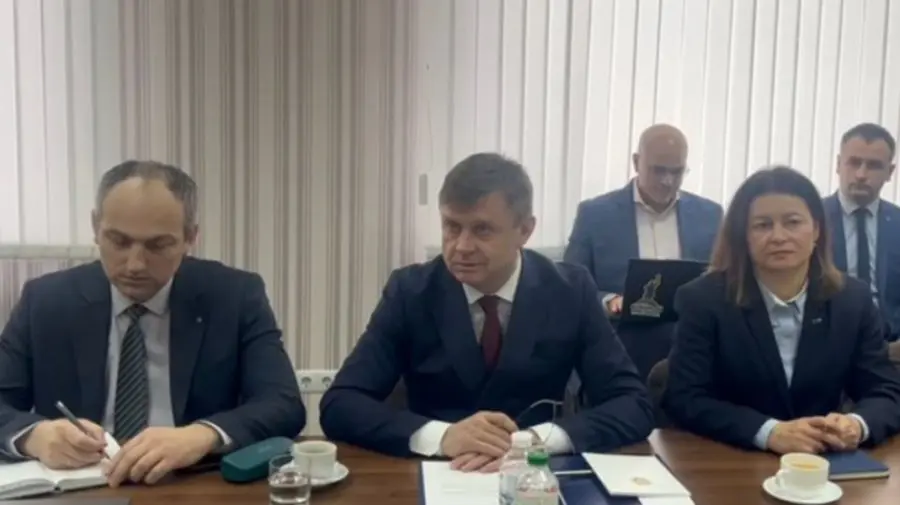
Deputy Prime Minister for Reintegration Valeriu Chiveri announced in Tiraspol the launch of a special fund to support the reintegration process. He made the statement during a meeting with Tiraspol political representative in the settlement process, Vitali Ignatiev, according to IPN.
Chiveri said authorities have finalized the legislative preparation of the Convergence Fund and expect to adopt the package of normative acts by mid March. The Government will then develop the mechanisms necessary for implementation.
The fund will allocate financial resources to social and infrastructure projects on the left bank of the Nistru River, aiming to accelerate economic and institutional integration between the two banks. Chiveri stressed that authorities must carry out reintegration within a clearly defined framework, with the goal of integrating the region into the common legal, economic, financial, social, and educational spaces of the Republic of Moldova.
He reaffirmed that officials will pursue the settlement process exclusively through peaceful, political, and diplomatic means, based on respect for the sovereignty and territorial integrity of the Republic of Moldova within its internationally recognized borders.
Chiveri noted that the reintegration process is already gaining momentum. He pointed to the daily movement of thousands of people from Tiraspol, Ribnita, Dubasari, and Bender who travel to the right bank for work, studies, or medical services. He also announced that authorities will continue extending the economic regulatory framework across the entire country and will maintain mechanisms that allow economic agents from the region to operate under Moldovan legislation.
The deputy prime minister clarified that European integration is not part of the Chisinau Tiraspol negotiations, but he encouraged the use of information mechanisms to prepare the business environment for EU accession. During the meeting, participants also discussed freedom of movement, access for journalists and human rights defenders, the situation of Romanian language schools on the left bank, and the problems faced by farmers in Dubasari.