



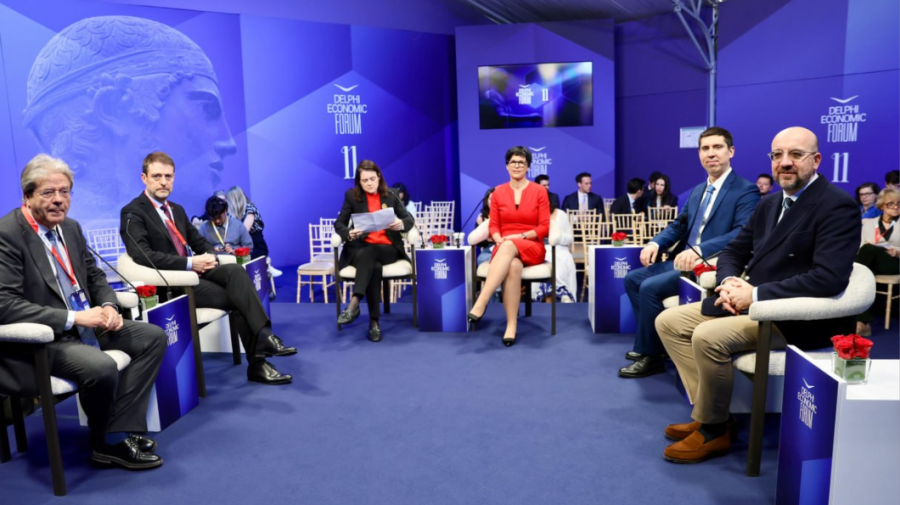
The Republic of Moldova is pursuing rapid integration into the European Union, while relying on strong economic reforms and functional institutions to become a competitive member, Mihai Popsoi, Deputy Prime Minister and Minister of Foreign Affairs, stated. He delivered the message at the Delphi Economic Forum in Greece, during a panel on the future of Europe, bani.md reports.
Popsoi emphasized that enlargement must go hand in hand with deeper economic integration. He stated that strengthening European institutions—such as a banking union, a financial union, and functional capital markets—is essential for real progress.
He also highlighted the untapped potential of the European single market, noting that internal barriers continue to limit its performance. Removing these frictions, he said, could significantly boost the European economy.
At the same time, the minister pointed out that fragmentation affects the competitiveness of Europe’s technology sector. He noted that, despite initiatives to accelerate growth, the sector still lags behind major global players such as Microsoft.
Referring to Moldova’s EU path, Popsoi said that authorities aim to join as soon as possible without compromising reform quality. He stressed that building strong institutions takes time and remains essential for long-term success.
He added that economic and institutional reforms primarily serve citizens by creating a stable, competitive, and democratic system capable of functioning effectively within the European single market.
In conclusion, Popsoi reaffirmed Moldova’s support for a merit-based accession process without exceptions. He stated that the country seeks full membership under the same conditions as other states, contributing to and benefiting from the European economy.
The Delphi Economic Forum brings together political leaders, officials, experts, and business and academic representatives each year to discuss geopolitical and economic challenges, climate risks, and digital transformation, while promoting dialogue, cooperation, and innovation for sustainable development.