



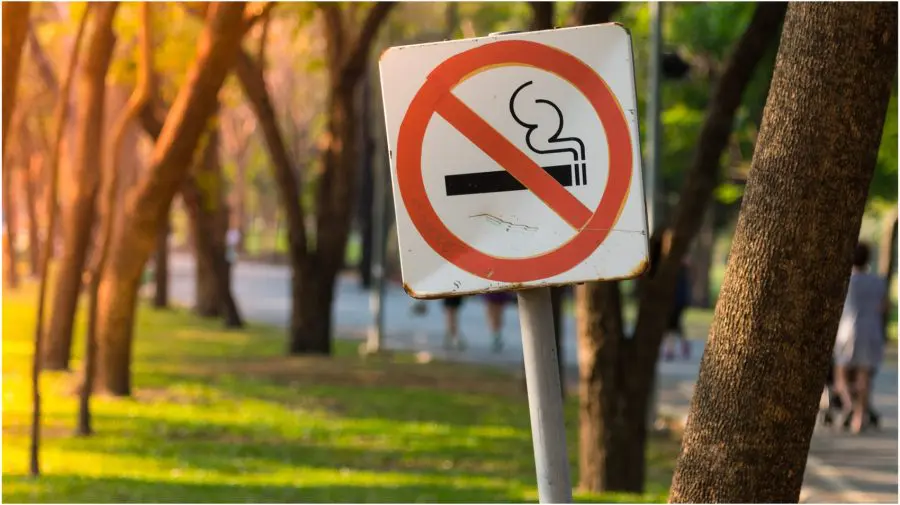
New restrictions on the consumption of tobacco and nicotine products, including electronic cigarettes and tobacco heating devices, will take effect starting June 24. The law will prohibit the use of tobacco and nicotine products in sports grounds, zoos, water parks, swimming pool areas, beaches, underground pedestrian passages, public transport stations, and boarding and disembarking areas.
The ban will cover both conventional cigarettes and electronic cigarettes, heated tobacco products, and other aerosol-emitting devices.
The authorities will also clarify rules on smoking in residential buildings. The law will prohibit the use of tobacco and nicotine products in stairwells, corridors, elevator cabins, and other shared spaces. It will also extend the restrictions to apartment and dormitory balconies.
Another key change will ban smoking and the use of electronic cigarettes within 10 meters of entrances to public buildings. The same rule will apply near open windows and ventilation systems.
The new provisions will introduce additional measures to protect minors. The law will ban nicotine pouches for oral use, including those containing synthetic nicotine, and will impose stricter safety and consumer information requirements on electronic nicotine products.
The authorities will also introduce tougher penalties for violating the rules, including smoking in prohibited areas and selling tobacco products to minors. Administrators and owners of public spaces will have clearer obligations to enforce compliance and maintain smoke-free environments.
Recent data show that nicotine product use remains high among adolescents. According to the ESPAD 2024 study, 21.5% of boys and 21.2% of girls aged 15 to 16 in the Republic of Moldova used electronic cigarettes in the past 30 days.
Globally, tobacco use remains one of the leading preventable causes of illness and death. Each year, smoking-related diseases kill more than seven million people, including about 1.6 million deaths caused by exposure to second-hand smoke.