



Moldova’s European path, the presidency of the Council of Europe and the institutional gap that threatens both
On May 19, 2026, President Maia Sandu received the European Order of Merit in the European Parliament in Strasbourg – alongside Angela Merkel, Volodymyr Zelensky and Lech Wałęsa – for her commitment to the European path of Moldova, democratic governance and resilience in the face of hybrid threats. I salute this recognition without reservation. President Sandu’s leadership has been consistent and significant, and Sweden will continue to support her.
However, the personal commitment of a president does not automatically reform the other institutions. Moldova’s European path goes not only through presidential declarations, but also through the daily activity of ministries, prosecutors and equality councils. It is precisely at this institutional level – where the gap between declared European values and institutional practices remains the main challenge of Moldova’s accession process – that the concerns addressed in this article become visible.
I. Why Sweden should be concerned: three decades of investment
Since Moldova’s independence, Sweden has been one of the country’s most consistent bilateral partners. Since 1996, Sweden has provided approximately $30 million in technical assistance for human rights, democracy and good governance. The current Eastern Europe Strategy for 2021-2027 provides for the allocation of 6.6 billion Swedish kronor ($712 million – editor’s note)and Moldova is among the main beneficiaries.
In 2023, Swedish development assistance to Moldova exceeded 520 million Swedish kronor (56 million dollars – ed.); in 2024, another 129 million Swedish kronor (13.9 million dollars – ed.) were specifically directed towards democratic institutions and the fight against corruption. In the field of gender equality, Sweden provided almost 9 million euros to Moldova through the agencies UN Women and UNFPA in 2023 alone.
In this context, the first Gender Equality Audit of the Ministry of Foreign Affairs of Moldova was conceived, funded, and implemented – initiated and coordinated by a high-ranking diplomat, carried out in collaboration with UN Women, and co-funded by Sweden. The audit documented structural deficiencies in the way the ministry treats women in leadership positions. Its recommendations were aligned with the commitments made by Moldova itself within the Council of Europe.
The diplomat who coordinated the audit is now facing criminal proceedings initiated at the request of the same ministry whose practices he examined. His bank accounts were seized without prior notice. For 19 months he did not have access to the audit report which constituted the only basis of the criminal case. The Council for Equality rejected his complaint about discrimination without examination – a decision declared illegal by two national courts.
When the person implementing a reform funded by Sweden is subsequently criminally prosecuted for its implementation, the credibility of the entire Swedish partnership model in Moldova is directly called into question.
II. The broader institutional context
The Economist Intelligence Unit’s Democracy Index 2025 has downgraded Moldova from the status of “flawed democracy” to that of a “hybrid regime” – one step above authoritarian regimes – citing deficiencies in electoral processes, governmental transparency and political pluralism.
The V-Dem Institute of the University of Gothenburg documents, in turn, a continuous democratic regression with direct applicability for Moldova. The data on Moldova’s cases at the European Court of Human Rights confirm the same picture: 468 cases in 2025 (+28.9%), fourth place in relation to population among the 46 member states of the Council of Europe, citizens resort to it 4.6 times more often than the European average, 45 violations found out of 48 decisions of the ECHR, 23.4 million euros in compensation dictated by the ECHR.
Moldovan legal analysts concluded: “Citizens obtain justice only at the European level, not before national courts”.
One fact must be stated clearly: during the period when Moldova presided over the Committee of Ministers of the Council of Europe, the country remained – and still remains today – under the full monitoring procedure of the Parliamentary Assembly of the Council of Europe (PACE), being one of only ten countries in this situation. And the process was neither closed nor relaxed. A country that leads an organization that monitors it has not thereby solved the problems for which it is monitored.
III. A pattern that cannot be ignored
In January 2025, I addressed a letter to the Equality Council of Moldova, expressing concern over the rejection of the gender discrimination complaint described above. Subsequently, I sent a letter to Secretary General Alain Berset, asking the Council of Europe to monitor developments, underscoring their importance ahead of the ministerial session in Chisinau. Since then, the situation has considerably escalated.
Three career diplomats – assigned to different regions and continents, each with a remarkable professional path – have publicly announced that they are facing criminal proceedings, alleged case fabrications, disciplinary sanctions, or institutional marginalization since the current ministerial leadership took office in January 2024. The common denominator is not geography or professional performance. It’s gender and timing. The documented cases have a recognizable structure:
- Internal audits conducted without adhering to mandatory procedural formalities, reports withheld for months on end, and conclusions of a disproportionate nature. In one case, these were used retroactively to justify an already decided recall; in another case, a sanitary product from the women’s bathroom was classified as a financial risk indicator in an ongoing criminal case.
- Criminal procedures based solely on unverified sources from the ministry. In one case, the Anti-Corruption Prosecution Office confirmed in writing that the diplomat was not part of any criminal case, directly contradicting the public statements of the ministry.
- In every case, the male colleagues who had direct legal responsibility for the financial files under scrutiny were not nominated, were not sanctioned, and are not targeted by any procedure.
In all three cases: women are criminally prosecuted or penalized. Men with similar or greater administrative responsibilities, are not.
At a global level, only 21% of ambassadors are women. Moldova has less than 30 embassies. Three simultaneous cases involving women during the mandate of a single minister, without any case involving men, constitute a structural pattern that falls under the incidence of Article 14 of the European Convention on Human Rights, in conjunction with Articles 6, 8 and 18 – the provision applied by the Strasbourg court in the cases of repressive criminal prosecution in the causes Ilgar Mammadov vs. Azerbaijan and Timoshenko vs. Ukraine. This case fits directly into the type of situations that the ongoing procedure of the Monitoring Committee of the Parliamentary Assembly of the Council of Europe (PACE) is intended to examine.
IV. Specific requests
On May 15, 2026, the ministerial session in Chisinau adopted a recommendation on combating violence against women. The Ministry, whose leader presided over that session, had promoted, in the preceding months, criminal charges against a diplomat based on an audit that classified a sanitary product from the women’s bathroom as a risk indicator, without taking similar measures against the male colleague who had direct legal responsibility for managing the accounts. The Chapter 23 Evaluators and the Monitoring Committee of the Parliamentary Assembly of the Council of Europe will examine this discrepancy.
I officially present these concerns within the PACE Commission for Equality and Non-Discrimination, the Commission for Legal Affairs and Human Rights, and the Monitoring Commission, and I urge the Swedish Government to address them bilaterally as well. I appeal to the constitutional authorities of Moldova to take action and formally respond:
— President Maia Sandu: The European Order of Merit recognizes your commitment to democratic governance and the rule of law. These values must also be defended within the institutions of Moldova. The documented pattern from the Ministry of Foreign Affairs requires your constitutional attention and a public response.
— Speaker of the Parliament, Igor Grosu: ensure parliamentary control over the use of criminal mechanisms against high-ranking diplomats and verify whether the treatment they are subjected to respects the commitments made by Moldova in the field of gender equality,
— Prime Minister Alexandru Munteanu: order independent checks of the audits that underpin the proceedings and publicly explain why male colleagues with direct financial responsibility are not subjected to examination; confirm compliance with the provisions of OMF 161/2020.
The Swedish delegations to the Parliamentary Assembly of the Council of Europe and the OSCE Parliamentary Assembly will present these issues in all relevant international forums, if there is no consistent response.
Moldova remains under the monitoring of the Parliamentary Assembly of the Council of Europe. It has been downgraded to the status of a hybrid regime in two independent evaluations. Its citizens appeal to the ECHR 4.6 times more often than the European average. Meanwhile, in the Ministry of Foreign Affairs, which presides over a session on combating violence, three female diplomats are subjected to procedures, while their male colleagues are not.
The European future of Moldova is not in question. The question is whether the institutional reform that the future demands will reduce the gap between the declared European values and the daily practice in the institutions where these should be felt. Democratic security begins at home. And three decades of Swedish investments, the Council of Europe’s monitoring procedure, and the EU accession process exist precisely to guarantee this.
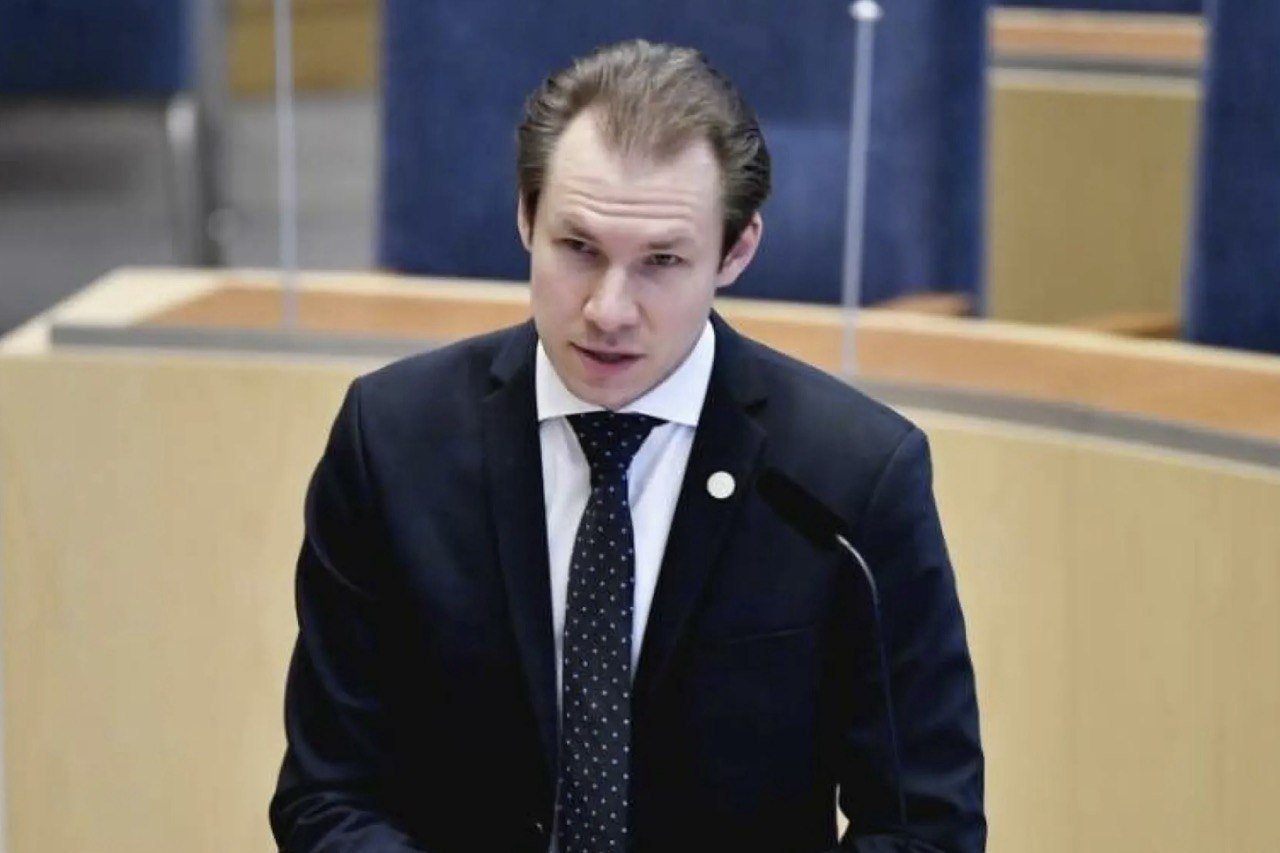
Markus Wiechel is a member of the Swedish Parliament, chairman of the Swedish Delegation to the Parliamentary Assembly of the Council of Europe, member of the Swedish Delegation to the OSCE Parliamentary Assembly, co-founder of the Sweden-Moldova Parliamentary Friendship Group