



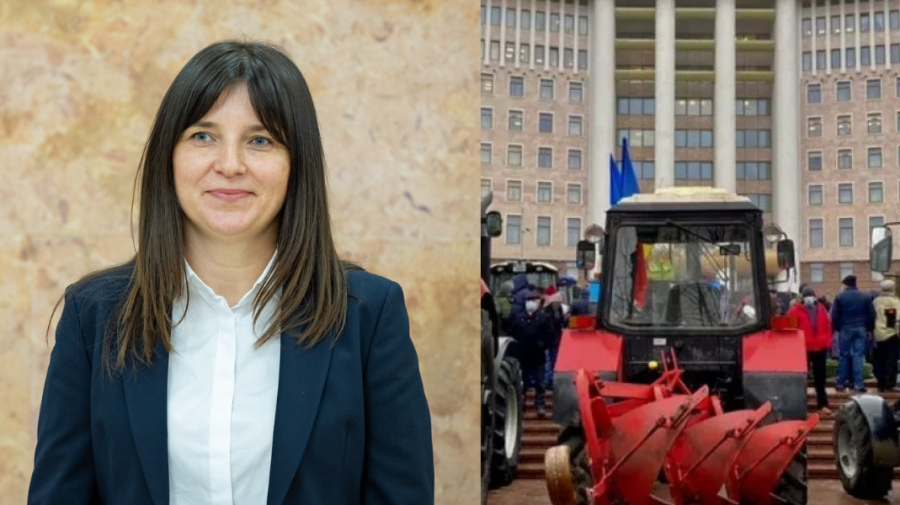
Producers and processors of grain and oilseed crops are opposing the planned increase of the VAT rate to 12%, saying they categorically reject the measure and want discussions with Finance Minister Victoria Belous.
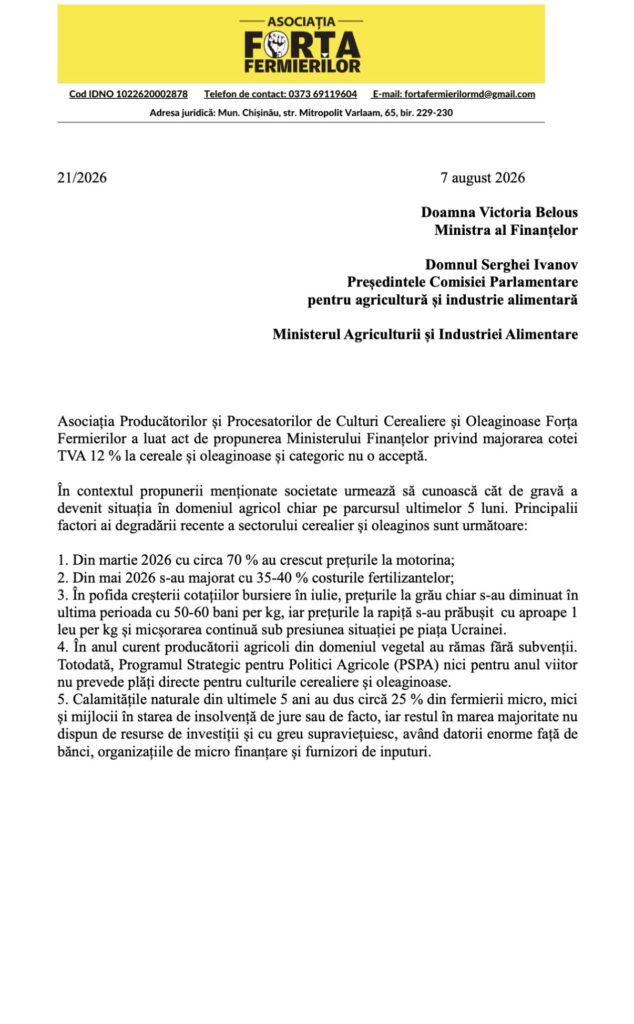
According to representatives of the sector, the increase comes amid rising production costs, including a 70% increase in diesel prices, fertilizer price hikes of up to 40%, declining prices for wheat and rapeseed, as well as losses caused by natural disasters. Farmers estimate that the additional tax burden could reach around 500 lei per hectare, or approximately 750 million lei for the entire sector.
The Force of Farmers Association argues that Moldova’s planned VAT rate would exceed the level applied in several European countries.
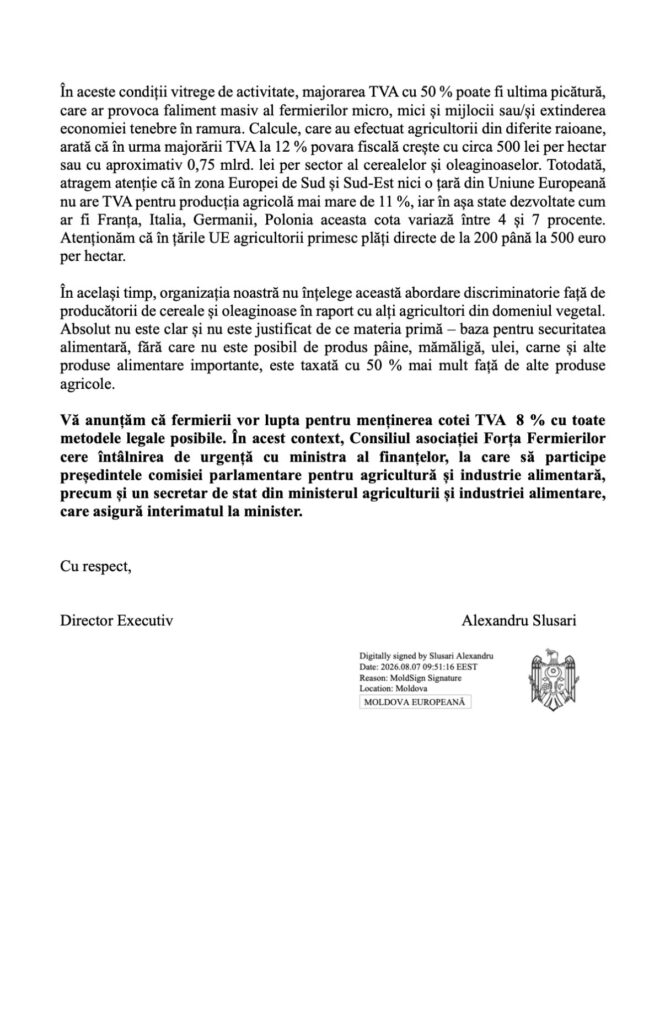
“At the same time, we draw attention to the fact that in Southern and Southeastern Europe, no European Union country has a VAT rate for agricultural production higher than 11%. In developed countries such as France, Italy, Germany and Poland, this rate ranges between 4% and 7%,” the association said in a statement.
Farmers also noted that agricultural producers in EU countries receive direct payments ranging from 200 to 500 euros per hectare, while Moldovan farmers do not benefit from similar levels of support.
The organization said it considers the measure discriminatory toward grain and oilseed producers compared with other agricultural sectors.
“It is absolutely unclear and unjustified why raw materials — the foundation of food security, without which it is impossible to produce bread, mamaliga, oil, meat and other essential food products — are taxed 50% more than other agricultural products,” the association stated.
Representatives of the sector are calling for the VAT rate to remain at 8%. They requested a meeting with Finance Minister Victoria Belous, the chair of the Parliament’s Agriculture Committee, and a Secretary of State from the Ministry of Agriculture, as the institution currently does not have a permanent minister.
Victoria Belous told Realitatea that she will hold discussions with farmers. The meeting is expected to be scheduled for next Tuesday.
Government spokesperson Dumitru Ciorici said that the Cabinet had presented the draft fiscal policy document only the previous day. According to the established procedure, the document will now enter a public consultation period, during which all interested parties can submit proposals and recommendations.