



The Republic of Moldova has opened European Union accession negotiations on two more clusters covering the internal market, competitiveness and inclusive growth. The decision was announced during the fourth intergovernmental conference, held this evening in Luxembourg.
Moldova could make further progress in its EU accession negotiations, European Commissioner for Enlargement Marta Kos said. The European official welcomed the progress made by the Republic of Moldova and stressed that the authorities’ determination to join the EU is backed by concrete results in implementing reforms.
“Opening two more clusters is very good news, but of course, we will not stop here. The two remaining negotiation clusters are technically ready, and we should now move towards opening them,” Marta Kos said, urging the authorities in Chișinău to maintain the pace of reforms.
Kos stated that Moldova’s progress forms part of the strongest annual pace of advancement in the EU enlargement process since 2002.
Ireland will continue to support the Republic of Moldova in its EU accession process and contribute to advancing negotiations. This was stated by Irish Minister for European Affairs Thomas Byrne, who praised the reforms implemented by the authorities in Chișinău and the country’s commitment to aligning itself with European standards.
“The dedication and commitment of the Republic of Moldova, as well as its alignment with EU standards, are commendable,” the Irish minister said, stressing that the authorities in Chișinău must continue implementing reforms.
Thomas Byrne said Ireland would continue working with Moldova until the end of the year, while the Council of the European Union would continue efforts to open negotiation Clusters 4 and 5.
“The Republic of Moldova has a friend in us, and we are undoubtedly allies,” the Irish official said.
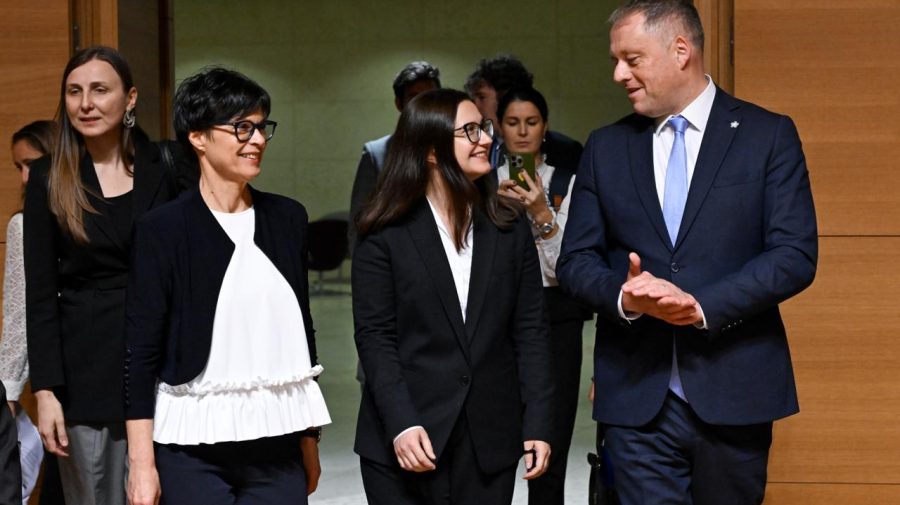
Deputy Prime Minister for European Integration Cristina Gherasimov described this stage as a major achievement for the country, emphasising that the pace of negotiations reflects both the authorities’ determination to implement reforms and the European Union’s political support.
In her address at the conference marking the opening of the two clusters, Gherasimov noted that Moldova had managed to advance its accession negotiations by opening four clusters in four months. She thanked the Irish Presidency of the Council of the EU, the Irish Prime Minister and the European Commission for their support for the European integration process.
According to the Deputy Prime Minister, behind the negotiation chapters are reforms that directly affect people’s lives, including product safety, workers’ rights, the quality of education and the security of digital services.
“For the citizens of the Republic of Moldova, these reforms mean better consumer protection, safer jobs and more opportunities to develop their skills. For entrepreneurs, they mean simpler procedures and predictable rules,” Cristina Gherasimov said.
What Clusters 2 and 3, Opened in Luxembourg, Cover
Cluster 2 includes nine negotiation chapters and concerns the free movement of people, goods, services and capital. Aligning with European standards could facilitate Moldovan companies’ access to the EU single market, contribute to the recognition of professional qualifications and strengthen consumer protection.
Cluster 3 comprises eight chapters and covers reforms in areas such as taxation, education, employment, digitalisation, research and industry. Its objectives include modernising the economy, supporting businesses and improving working conditions.
Following the opening of the two clusters, the Republic of Moldova will continue implementing the reforms set out in its National Programme for Accession, while the European Union will assess the progress achieved. The authorities in Chișinău will also negotiate, in parallel, the transition periods needed to align with European rules.
Moldova had previously opened negotiations on Cluster 1, “Fundamentals,” and Cluster 6, “External Relations.”
With the two new clusters opened, two groups of chapters will remain for which negotiations have not yet begun: Cluster 4, “Green Agenda and Sustainable Connectivity,” and Cluster 5, “Resources, Agriculture and Cohesion.”
The Republic of Moldova received EU candidate status in June 2022, and the accession process advanced further in 2026 with the opening of additional clusters. The accession process comprises 33 chapters grouped into six clusters. Negotiations on Cluster 1, “Fundamentals,” were opened on June 15, while Cluster 6, “External Relations,” was opened on July 14.
The Government aims to conclude technical negotiations by early 2028 and be ready for EU accession by 2030.