



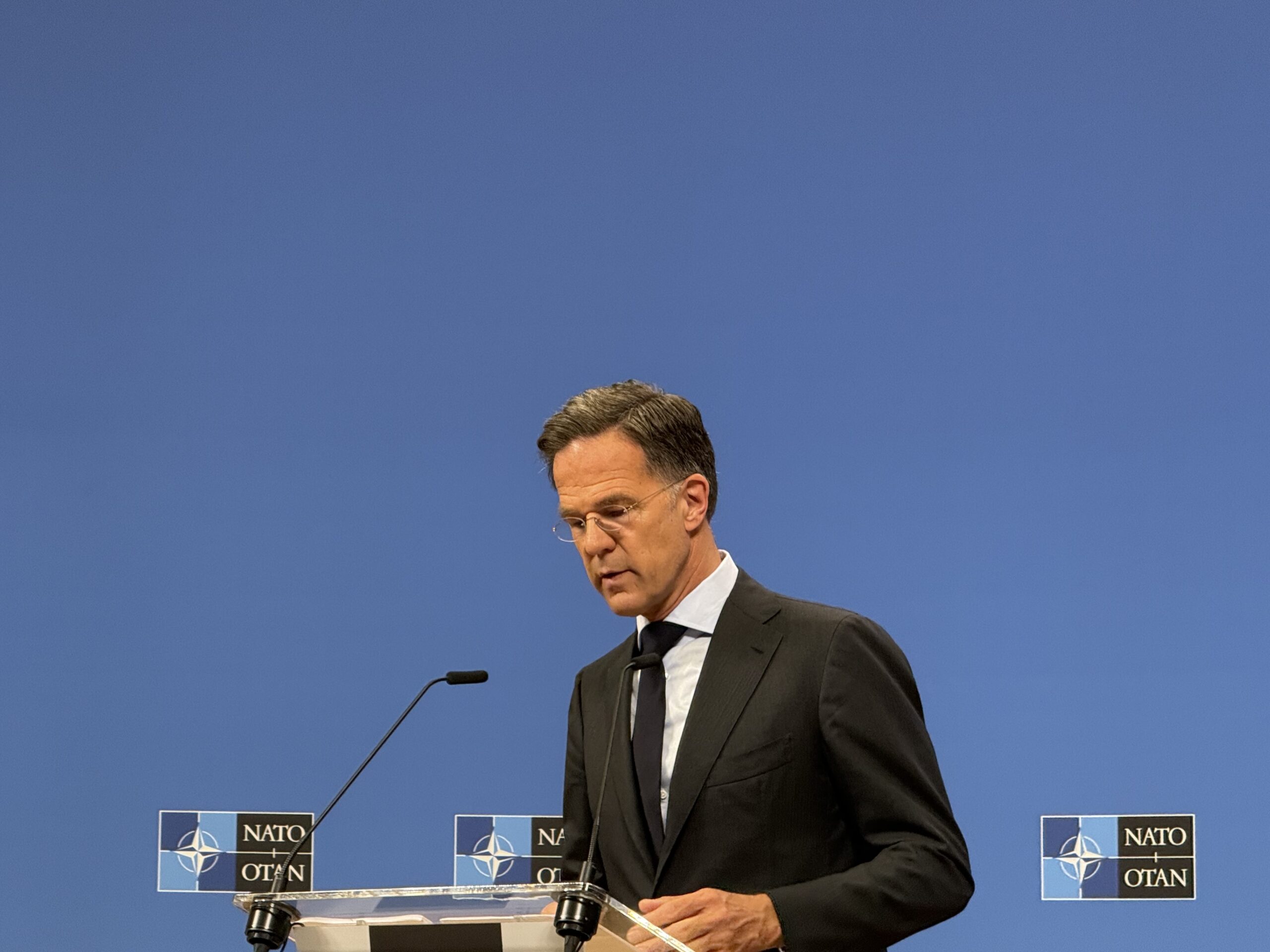
NATO Secretary General Mark Rutte accused China, North Korea and Iran of helping sustain Russia’s war against Ukraine, while stressing that Allied support for Kyiv remains a priority. He made the remarks during a press conference ahead of the Meeting of NATO Defence Ministers in Brussels.
According to Rutte, Moscow continues to receive critical support from a group of countries that are closely coordinating their efforts despite international sanctions and pressure.
“Of course we know already that Russia is not alone, that they get vital support from North Korea, from China, from Iran, that these four countries are closely working together and that there are mutual agreements, maybe not always legally on paper, but who is doing what for the other and what you get in return,” Rutte said.
The NATO chief pointed in particular to military cooperation between Moscow and Pyongyang, arguing that both sides benefit from the partnership.
“For example, when it comes to North Korea, they are getting vital ballistic missile technology from the Russians in return for their support for the war effort of Russia, this crazy war progression against Ukraine,” he stated.
Rutte also accused Beijing of assisting Moscow in circumventing Western restrictions and providing goods that can be used for both civilian and military purposes.
“When it comes to China, what we know, of course, is the sanctions circumvention, the dual-use goods, et cetera. We are not naive. We follow everything exactly,” he added.
At the same time, the Secretary General emphasized that continued support for Ukraine remains one of NATO’s main priorities as Russia’s full-scale invasion enters its fifth year.
“Together, Allies have given billions in artillery, and ammunition and aid, but it is crucial to continue this support to help Ukraine maintain its advantage,” Rutte said.
The NATO chief linked support for Ukraine to broader efforts by the Alliance to strengthen its collective defence capabilities amid what he described as a rapidly evolving security environment.
“We need more forces, more resources and a much stronger industrial base. That means making steady increases to defence investment. And more fairly sharing responsibility for our collective security,” he said.
Rutte noted that NATO members had agreed to increase defence spending to 5% of GDP by 2035 and urged Allies to present “clear, concrete and credible plans” to meet the target, preferably ahead of schedule.
According to the Secretary General, European Allies and Canada increased their core defence investment by more than 90 billion dollars in 2025, representing nearly a 20% increase in a single year. He said those investments are already translating into new capabilities and a greater European contribution to NATO’s deterrence and defence posture.
Rutte also dismissed suggestions that adjustments to U.S. force commitments within NATO signal a weakening of Washington’s commitment to the Alliance.
“The US has made clear that it is committed to NATO,” he said, arguing that European Allies and Canada are increasingly ready “to do more” in the area of conventional defence while the United States continues to maintain its global responsibilities.
Support for Ukraine remains one of NATO’s central priorities. At the Washington Summit in 2024, Allies pledged at least €40 billion in security assistance for Kyiv. NATO later reported that member states exceeded that commitment, providing more than €50 billion in military and security assistance to Ukraine during 2024, with nearly 60% coming from European Allies and Canada.
The Alliance has also announced additional commitments worth approximately €35 billion in security assistance for Ukraine in 2025, while continuing efforts to coordinate military aid, training and equipment deliveries through NATO structures.
NATO officials have repeatedly argued that sustained military support is essential for helping Ukraine defend itself against Russian aggression and maintain its position on the battlefield.