



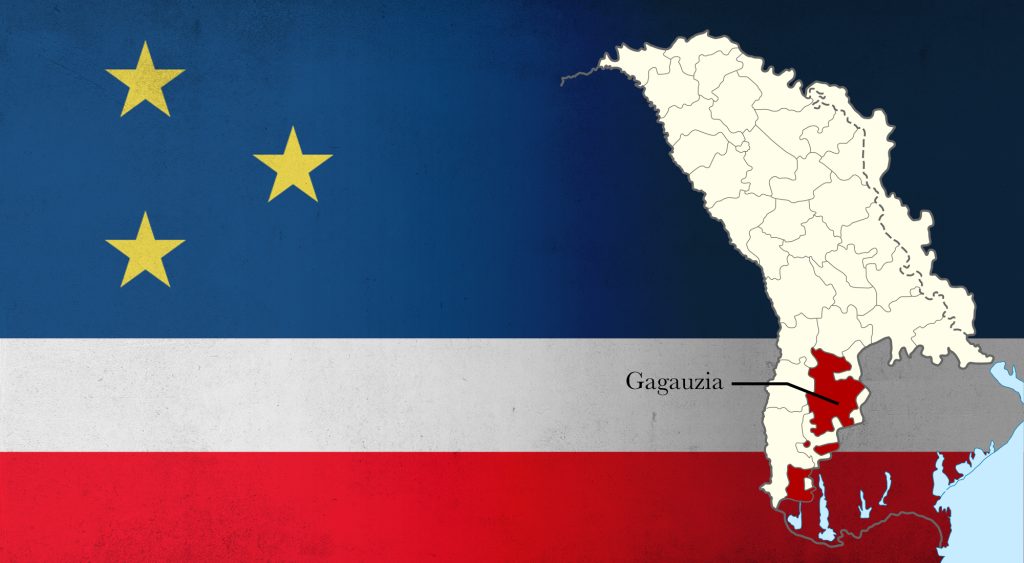
The political situation related to the elections in Gagauzia is gradually transforming from a local institutional crisis into a more complex political conflict between Comrat and Chisinau. It is a new conflict, against the backdrop of the old, unresolved one. Formally, it is about legal misunderstandings and procedural aspects, but the postponement of the electoral process shows that the problem is much deeper. More and more signs indicate that the delay of the elections could be not only a consequence of legal uncertainty, but also a conscious strategy of a part of the regional elites.
The dialogue that never happened
In recent months, the central authorities of Moldova have undertaken a series of actions to unblock the situation. Discussions have taken place in parliament, representatives of the Central Electoral Commission have proposed the creation of joint working groups, and Chisinau has invited representatives of Gagauzia for consultations to find a legal solution. It should not be forgotten where all these movements started: namely from the visit of the head of the Information and Security Service of the Republic of Moldova, Alexandru Musteata, to Comrat.
However, these recent attempts by Chisinau have not led to any real progress. Representatives of the region either postponed discussions or delegated politicians to the negotiations who adopted a rigid stance and essentially blocked any compromise.
The situation that has arisen shows that the crisis is not only legal in nature, but also political. And that makes it even more complicated. The longer the elections are postponed, the longer the current configuration of power in the region is maintained.
The logic of maintaining power
For some political leaders in Gagauzia, postponing the elections may be a rational political strategy. Organizing a new vote involves the risk of losing influence and positions, especially in a context of declining trust in regional elites and increasing competition.
In the public space, the most active figures associated with the current power configuration in the region remain: the interim president of the Gagauz People’s Assembly, Nicolae Ormanji (appointed after Dmitri Constantinov’s flight), the vice-president of the APG of autonomy, Gheorghe Leiciu, as well as the deputy governor, Ilie Uzun. These politicians have been the key participants in the discussions about the electoral process over the past few months.
Therefore, postponing the elections allows the maintenance of the status quo. The longer the institutional deadlock lasts, the more time the politicians in power have to consolidate their positions, mobilize their supporters and shape a beneficial political agenda.
Such an approach is not unique. In many political systems, the postponement of electoral procedures is used as a tool to maintain power. However, for an autonomous region, such a strategy acquires additional dimensions: it begins to influence the relationships between the center and autonomy.
The influence of Shor’s network
An additional factor in the political dynamics of Gagauzia remains the influence of political networks associated with Ilan Shor’s group. Although the Shor party was declared unconstitutional, and Shor, after his defeat in the parliamentary elections, stated that he is withdrawing from politics, his political influence in certain regions of the country is maintained through local elites, civic organizations and new political initiatives.
Among the figures who regularly participate in regional political discussions are Ivan Colioglo, Vitali Derevenco, Dmitri Chiseev, Valeri Ianioglo, as well as a number of civic activists who promote the idea of a greater political distance from Chisinau.
In Gagauzia, this network continues to hold significant resources – from media influence to organizational capabilities. For politicians associated with this group, maintaining control over regional institutions is of strategic importance. Comrat can be considered one of the last support points of the political infrastructure created by Shor.
In this context, the postponement of elections becomes a means of maintaining the institutional levers of power.
New platforms and the radicalization of discourse
Against the backdrop of the political crisis in the region, new civic and political initiatives have begun to emerge. Among these are the “Our Autonomy” movement, associated with activists Mihail Vlah and Ivan Panei, as well as the “Platform 111” project (111 – from the article in the Constitution of the Republic of Moldova that grants autonomy a special status), initiated by Dmitri Chiseev.
Formally, they present themselves as structures for civic mobilization, however their public rhetoric is often directed against the central authorities, and some leaders of the movements have discredited themselves through ties with an oligarch in exile.
In the public space, theses about “Chisinau’s pressure on the region”, “violation of the rights of the region’s inhabitants” and the need to distance oneself from the decisions of central institutions are increasingly spreading. Such narratives gradually create an atmosphere of political confrontation, and the rhetoric can fulfill several functions simultaneously. Firstly, it mobilizes the electorate around the theme of protecting autonomy. Secondly, it provides an explanation for the delay of elections as a reaction to the actions of central authorities. Thirdly, it outlines a political agenda in which the conflict with Chisinau becomes the central element of regional politics.
Where does autonomy end
The crisis related to the elections in Gagauzia raises yet another broader question – where is the boundary drawn between the region’s autonomy and the constitutional order of the state.
On one hand, the region possesses its own governing bodies and a certain degree of political independence. The Gagauz People’s Assembly plays a key role in regional administration and has the authority to make decisions within the framework of its autonomous status.
On the other hand, elections and electoral procedures must be in accordance with national legislation. The Central Electoral Commission is responsible for ensuring the application of uniform standards for the conduct of elections throughout the country.
Exactly at this point the conflict of interpretation arises: the regional elites emphasize the autonomous attributes of the People’s Assembly, while the central authorities insist on the necessity of respecting national rules.
The role of the Constitutional Court
One of the key steps of the central authorities was the notification of the Constitutional Court by the Ministry of Justice. The Court must provide a legal assessment regarding the legitimacy of organizing elections in Gagauzia and determine which competencies belong to the regional institutions and which to the central organs of the state.
The decision of the Constitutional Court could become a turning point in the conflict. This will either confirm the positions of the central authorities or will consolidate a broader interpretation of autonomous powers.
However, even a legal decision does not guarantee an immediate political compromise. If the conflict has deep political causes, legal mechanisms can only establish the framework for further negotiations.
Possible scenarios
The situation regarding the elections in Gagauzia could evolve, according to several scenarios. The first is a gradual de-escalation of the conflict through negotiations and the creation of common working mechanisms between Chisinau and Comrat. This scenario assumes compromise and the harmonization of electoral procedures.
The second scenario could lead to a prolonged political conflict, in which elections will continue to be postponed, and regional politics will revolve around confrontation with central authorities.
The third scenario is related to the active involvement of legal institutions, particularly the Constitutional Court. In this case, the subsequent evolution will depend on how ready the parties are to accept the legal decision.
The political test of autonomy
The crisis related to the elections in Gagauzia becomes a sort of test for the entire autonomy model in the Republic of Moldova. This shows how resistant the interaction mechanisms between the center and the region are and how efficiently the institutional procedures can function under the conditions of a political conflict.
It is also important that all this is happening in parallel with the administrative-territorial reform that the authorities in Moldova have begun to implement.