



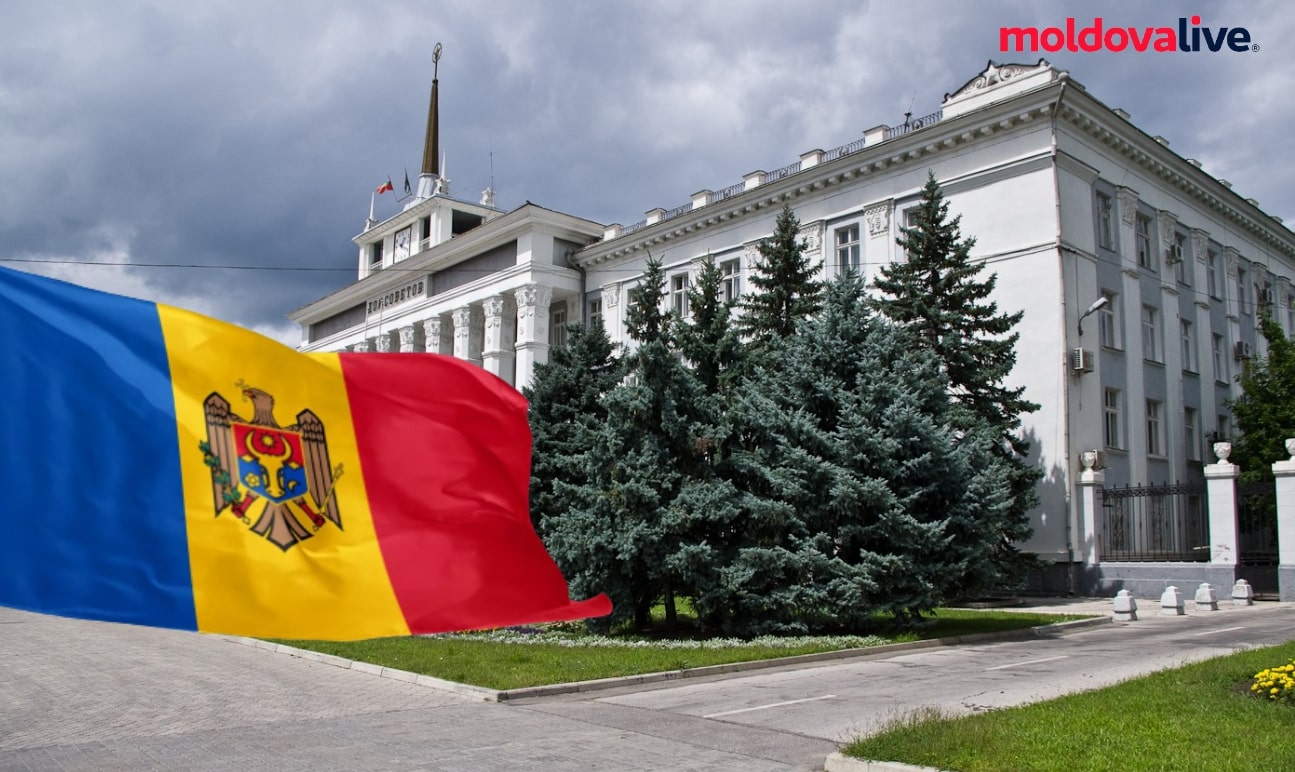
The separatist authorities warn that a “large-scale humanitarian crisis” could occur after Parliament adopted, in the first reading, a draft law eliminating tax benefits for economic agents in the Transnistrian region.
The so-called foreign ministry of the self-proclaimed region claims that, following a meeting of political representatives on February 26, the Transnistrian side proposed holding a session of economic experts between March 3–9, reports bani.md. They said the initiative responded to the urgent need to stop Moldova’s “discriminatory plans” regarding VAT, excise duties, and other payments imposed on enterprises in the region.
Tiraspol asserts that Chisinau ignored these proposals and did not respond to repeated requests. “None of the Transnistrian initiatives has been accepted to date,” the statement reads.
The authorities in the region argue that the draft law adopted in the first reading could have serious consequences, potentially collapsing production and trade and violating human rights on a massive scale. They also warn that implementing the measures could disrupt the region’s supply of energy resources and fuel and permanently block the settlement process.
“The Parliament adopted these measures without dialogue, violating the principles and agreements of the negotiation process, as well as international and European norms,” the statement says. The Transnistrian authorities claim that Chisinau’s actions “fall outside the legal framework.”
Tiraspol announces that it will continue to defend citizens’ and businesses’ interests through negotiation and other available methods. The administration urges Chisinau to return to dialogue, stop pressuring residents of the region, and revise its confrontational approach.
The left-bank administration also calls on international participants in the “5+2” negotiation format to intervene to prevent “a new stage of economic blockade,” which, they argue, could destabilize the region and violate socio-economic rights.
This reaction follows Parliament’s late-March approval, in the first reading, of a draft law that gradually eliminates tax exemptions for economic agents in the Transnistrian region by 2030 and applies a unified fiscal regime across the country.
Authorities in Chisinau argue that the measure aims to reintegrate the national economy. Radu Marian, President of the Committee on Economy, Budget, and Finance, stated that the basic principle is “same country – same taxes” and that the government will implement the process gradually to minimize the impact on residents on the left bank of the Dniester.