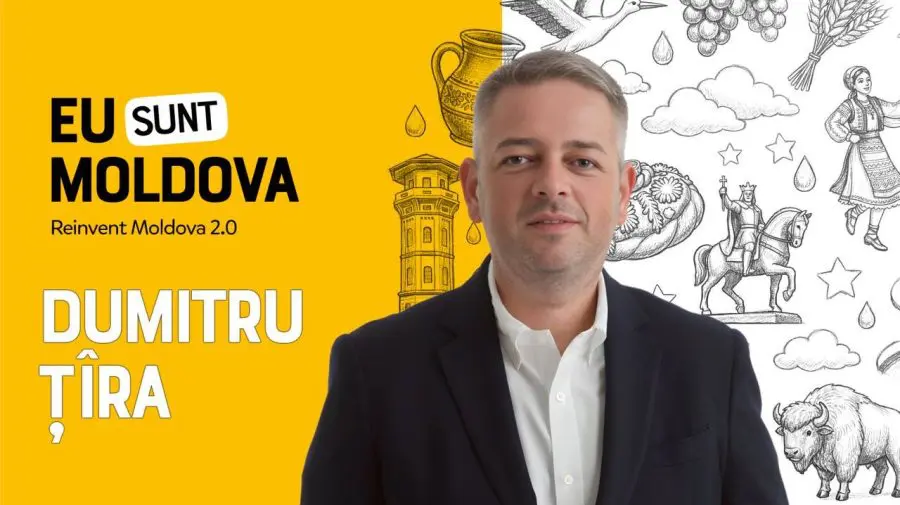
There is a word we often use, yet each of us feels it differently — Homeland.
For some, the Homeland means the place where they were born. For others, it means the place they left and long to return to. For many, the Homeland means the place where the people they love live.
Beyond all these perceptions, the Homeland means something deeper — it means its people.
Imagine, for a moment, Republic of Moldova without people. Imagine no voices in the markets, no children’s laughter in schoolyards, no ideas, dreams, music, celebrations, or traditions. Without people, Moldova would not exist.
A country is not just a territory. A country is the people who live there, who work, create, hope, and believe.
The history of Moldova tells the story of people who continued to believe in their country even in the hardest times. People endured famine, deportations, the collapse of the Soviet Union, economic crises, political instability, and migration—yet they did not give up on the idea that Moldova could become better.
People do not write this story only through politicians or state institutions. Ordinary individuals shape it every day: teachers, doctors, workers, entrepreneurs, artists, journalists, and young people searching for their path. Each of us contributes to it.
Love for the Homeland begins with the connection between people and the place they call home. It grows through the language we speak, the traditions that shape us, and the values that unite us.
Patriotism is not just a feeling—it is responsibility. We show it when we contribute to the common good, improve what we do, and build a society where people trust each other and their future.
We do not express patriotism only through grand statements or slogans. We show it in everyday choices: how we work, how we act honestly, and how we get involved.
A country does not improve through strategies and documents alone. It improves when people choose to take part in its transformation—when they create, speak openly, and stay connected to their shared future. It improves when they say: I am Moldova.
At certain moments in history, people must show greater courage. They must ask not only what kind of country they have, but what kind of country they want to build—a modern, democratic state where people live with dignity, freedom, and hope, and where the country belongs to European civilization.
These changes do not happen on their own. They happen when people choose to believe in their country, choose to stay or return, and take responsibility for its future.
Love for the Homeland also means caring for the legacy we leave behind. It means protecting culture, memory, and shared values. Above all, it means building a country where future generations can live with dignity and freedom.
Patriotism does not belong only to the past. It lives in the present and shapes the future. It requires the courage to believe that Moldova can become stronger, more modern, and more prosperous—and the responsibility to help make it happen.
The Homeland is not something abstract.
The Homeland is us.
I am Moldova.