



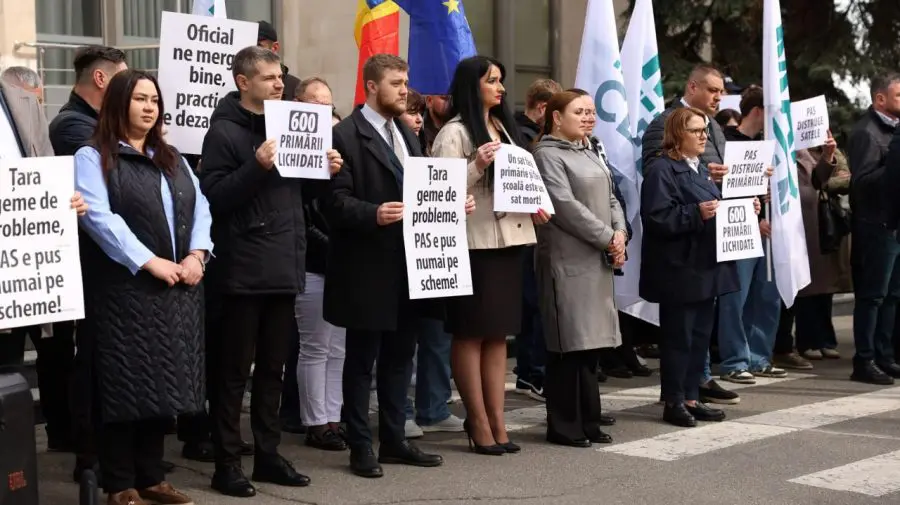
Members and supporters of the National Alternative Movement (MAN) protested in front of the Government building in the Republic of Moldova, criticizing rising prices and the administrative-territorial reform initiated by central authorities.
According to organizers, around 100 people attended the demonstration. Protesters accused the government of failing to support citizens amid increasing costs, arguing that people are left to bear the full impact of price hikes.
“The authorities are leaving citizens alone in the face of a wave of chain price increases, without support from the state,” participants said, adding that ordinary citizens remain the “last link” in the economic chain, unable to pass on rising costs.
During the protest, MAN representatives also strongly criticized the reform promoted by the ruling Party of Action and Solidarity, claiming that the amalgamation of localities is aimed at weakening local public administration and consolidating political control in the territories.
They argued that the reform could lead to the removal of mayors who are not aligned with the ruling party and reduce local autonomy, turning local leaders into executors of decisions made by central authorities.
Protesters called on the government to take measures to limit the impact of price increases, support affected sectors, and revise the reform process. They also announced plans to organize further demonstrations.
Government spokesperson Daniela Crudu responded that authorities support peaceful and constructive protests. She stressed that the issues raised—such as depopulation, weak public services, and lack of investment—are not caused by the reform but are the very reasons behind it.
“The reform does not mean the liquidation of villages, but the creation of stronger communities with real resources, better services, and development opportunities,” she said, adding that the process will continue with dialogue while emphasizing the need for structural changes.