



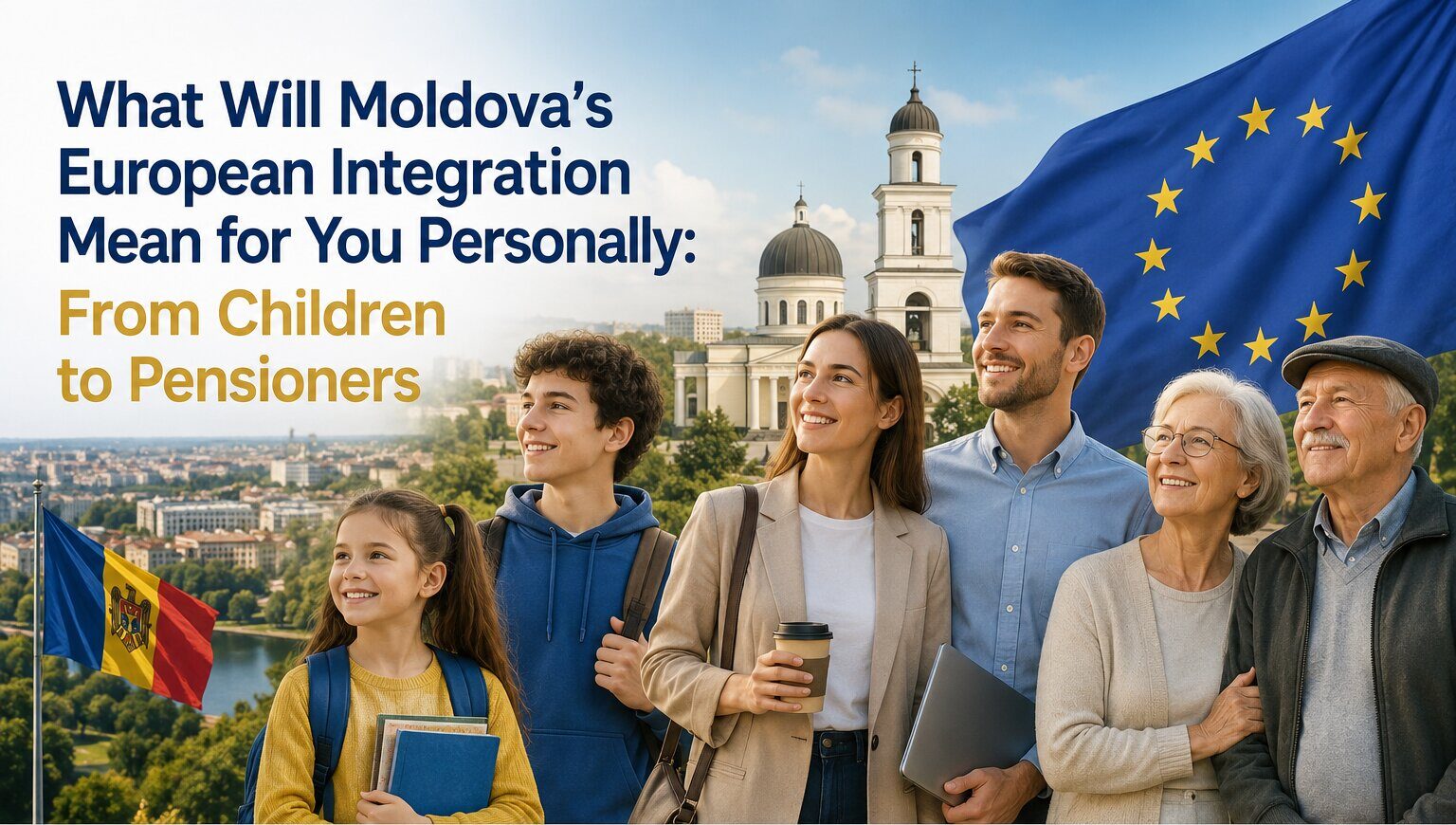
European integration is often discussed in terms of large-scale politics and macroeconomic indicators. However, its real meaning is not found in declarations or negotiations, but in concrete changes in everyday life. For each social group, it translates into income, services, infrastructure, and access to opportunities. Here is what it means in practical terms.
The Scale of EU Support: Real Working Numbers
Even before potential EU membership, Moldova already receives significant financial support from the European Union:
- around €1.9 billion in EU macro-financial assistance for 2021–2027 (grants and loans combined);
- more than €260 million through the EU4Moldova program for infrastructure, energy, and regional development;
- over €100 million annually via the European Investment Bank and other instruments;
- participation in Erasmus+, which already allows thousands of Moldovan students and teachers to access exchanges and grants;
- the total EU external assistance budget for the Eastern Neighbourhood under NDICI (Neighbourhood, Development and International Cooperation Instrument) amounts to approximately €19.3 billion for the region until 2027.
The experience of Central and Eastern European countries illustrates the scale of impact:
- Poland received more than €250 billion in EU funds during its membership period;
- Romania received over €90 billion;
- Croatia nearly doubled its GDP per capita within 10 years of EU accession.
Children: Education, Safety, and Equal Start
Preschool and Primary Education
EU standards in education funding translate into:
- modernization of schools and kindergartens through EU funds;
- upgraded infrastructure (sanitation, heating, safety);
- improved school meals based on EU nutrition standards;
- digitalization of learning;
- development of inclusive education systems.
In EU countries, education spending averages 4–6% of GDP, with a significant share invested in infrastructure and accessibility.
Teenagers
For secondary school students, European integration means:
- participation in Erasmus+ exchange programs;
- access to European educational platforms;
- scholarships and international internships;
- stronger foreign language acquisition through real-life practice.
Today, more than 10,000 young people from Eastern Partnership countries participate annually in Erasmus+ programs, and this number continues to grow.
Young People Aged 18–35: Jobs, Income, and Mobility
Education and Career
European integration implies:
- recognition of diplomas across EU member states;
- access to a single labour market of around 450 million people;
- the ability to work legally in EU countries;
- full social protection under EU labour standards.
Income Levels
Income differences between Moldova and the EU remain significant:
- average monthly salary in the EU: approximately €2,000–€3,500;
- in Moldova: several times lower.
Historically, countries that joined the EU experienced salary growth of 30–70% within 10–15 years following accession.
Entrepreneurship and Business
For young entrepreneurs:
- EU grants for SMEs (often worth tens of thousands of euros);
- access to programs such as SME Instrument and Horizon Europe;
- entry into a market of over 440 million consumers;
- reduced export barriers and simplified trade regulations.
Working-Age Population: Stability and Protection
Labour Market
EU labour legislation ensures:
- paid annual leave of at least 20 working days;
- regulated working hours (around 40 hours per week on average);
- protection against unfair dismissal;
- workplace safety standards.
Investment and Economic Growth
Experience from EU member states shows:
- foreign direct investment increases by 2–4 times after accession;
- GDP growth accelerates by an additional 1.5–3% annually in the early reform period;
- large-scale infrastructure development financed by cohesion funds.
Healthcare
Average EU healthcare spending is around 9–11% of GDP, ensuring:
- access to modern treatment protocols;
- digital healthcare systems;
- quality and transparency standards;
- preventive medicine development.
Pensioners: Stability and Quality of Life
Pensions
The EU does not set a unified pension level. However, economic growth and structural funding enable countries to:
- increase pension payments;
- index pensions in line with inflation;
- expand social assistance programs.
In Eastern European countries, pensions increased by 40–100% over 10–15 years after EU accession (in nominal terms).
Healthcare and Elderly Care
For older citizens:
- access to high-quality medicines;
- development of geriatric services;
- home-care support programs;
- chronic disease prevention systems.
Single Mothers and Families with Children
EU member states apply targeted social support systems:
- monthly child benefits (ranging from €100 to €300+ depending on the country);
- tax relief for parents;
- subsidies for childcare and kindergartens;
- employment support programs for parents;
- housing assistance for vulnerable families.
People with Disabilities and Individuals with Developmental Differences
EU policy is based on the principle of equal opportunities.
This includes:
- mandatory accessibility of public infrastructure;
- inclusive education systems;
- anti-discrimination protection in employment;
- social integration programs;
- assistive technologies and rehabilitation services.
For families, this means a structured support system rather than fragmented assistance — from early intervention to education and employment pathways.
What Is Already Changing Today
Even before EU accession:
- dozens of schools and hospitals are being modernized;
- roads and regional infrastructure are under development;
- agricultural sectors receive targeted support;
- energy efficiency programs are expanding;
- youth and educational initiatives are being funded.