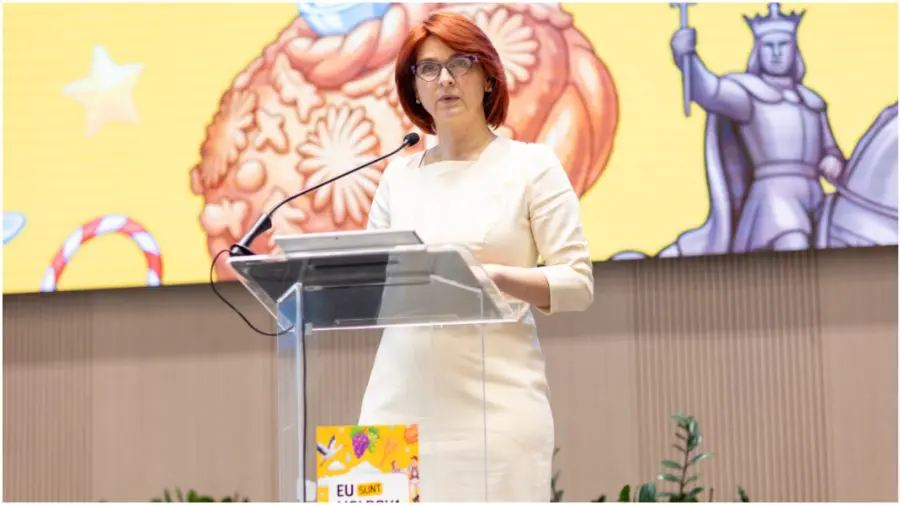
Russian disinformation does not rely on spectacular falsehoods, but rather on disappointment and a lack of hope, said Ana Revenco during the Reinvent Moldova 2.0 event organized by the Realitatea Media Group.
The head of the Center for Strategic Communication and Combating Disinformation explained that the main goal of propaganda is not direct persuasion, but demobilizing people.
“Russian disinformation does not primarily work with spectacular falsehoods. No. It works with one thing – disappointment, the feeling that nothing works, that no one is doing anything, that everything is difficult, nothing is moving, and that this is how things will remain,” Revenco said.
According to her, propaganda does not only try to shape perceptions about the West or Russia, but also aims to weaken citizens’ confidence in their own ability to act.
“The goal is not just to convince you that Europe is bad and the Russian Federation is good. No. The main goal is to make each person stop believing strongly enough in something to take action. This disengagement of citizens is a very concrete, operational, measurable objective of every disinformation action, operation, and campaign we are exposed to every day,” the former interior minister added.
In her view, expressions such as “it’s hard,” “someone should do something,” or “others should do it” are signs that propaganda is having an effect.
“If you hear such things or say them yourself, it is an indicator that Russian propaganda is once again working,” Revenco concluded.
The Reinvent Moldova 2.0 event brought together experts and opinion leaders in a TED Talk–style format, designed as a platform for dialogue and civic mobilization in support of Moldova’s European path.