



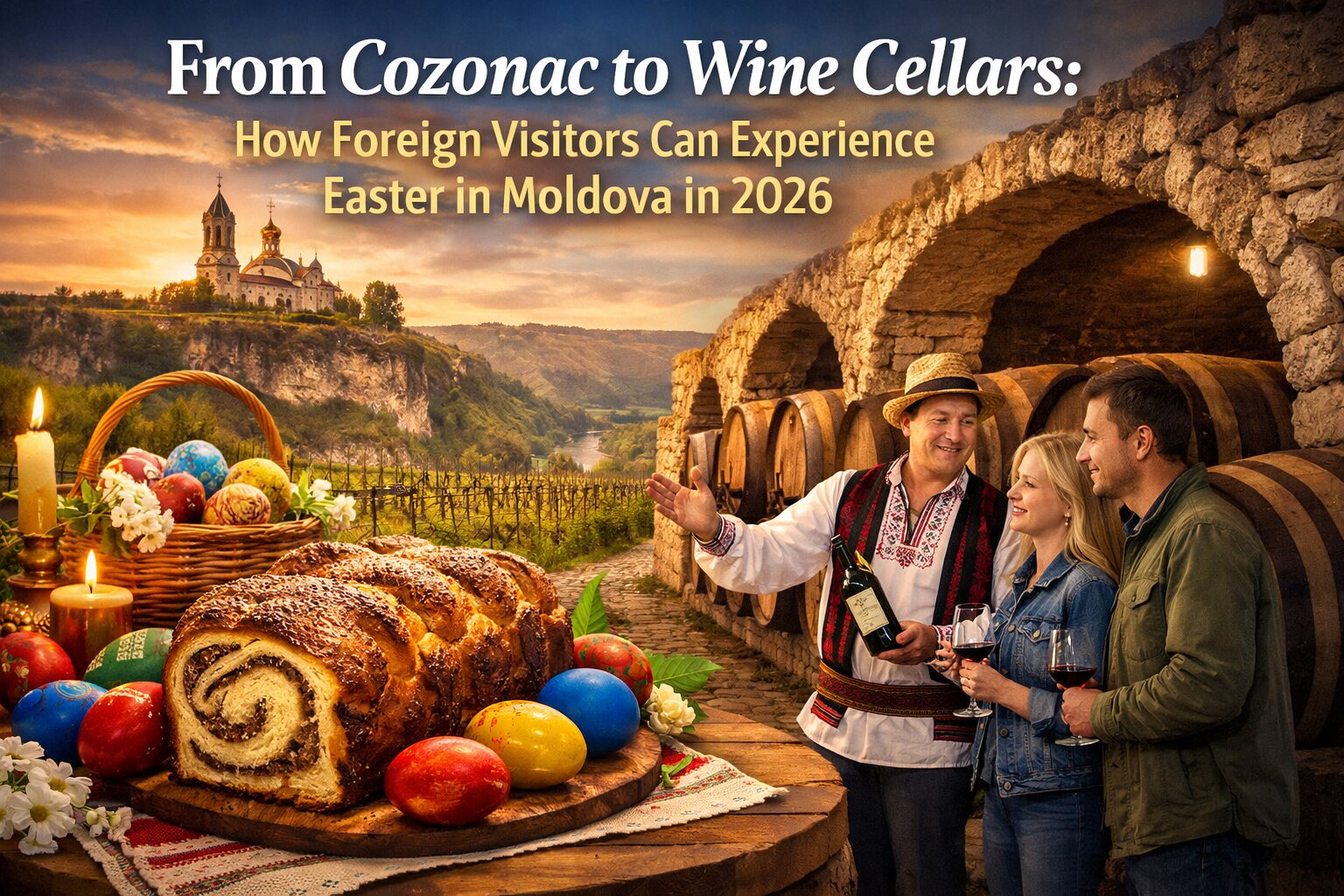
Foreign tourists arriving in Moldova for Easter 2026 will find more than traditional church services and quiet family gatherings. In recent years, the holiday has evolved into a multi-layered experience, combining seasonal gastronomy, wine tourism, urban culture, and curated travel routes.
For visitors without local connections, this creates an opportunity to explore Easter through a mix of authentic traditions and modern interpretations.
Easter Flavours in the City: Cafés and Seasonal Menus
One of the most accessible ways to experience Easter in Chisinau is through its growing café and restaurant scene, where traditional desserts are reimagined in a contemporary format.
Places like Delice d’Ange, Creme de la Creme, and Tucano Coffee typically introduce limited Easter selections, allowing visitors to try cozonac or pasca alongside specialty coffee in a relaxed setting.
Instead of buying festive pastries to take away, visitors can sit down and turn the experience into a small cultural moment.
Cost: 4 to 12 euros for coffee and Easter desserts.
At the same time, restaurants such as Pegas Terrace and Restaurant and Odelle often offer Easter brunches or seasonal menus, blending traditional ingredients with modern cuisine.
Cost: 15 to 50 euros per person.
Wine Tourism with a Seasonal Twist
Wine remains one of Moldova’s strongest attractions, and during Easter, wineries often adapt their programs to include seasonal tastings and themed experiences.
The underground complexes Cricova Winery and Milestii Mici Winery continue to be top destinations, offering guided tours through vast underground galleries.
During the holiday period, some wineries introduce Easter themed tasting menus, traditional snacks paired with local wines, and extended tours for visitors.
For a more boutique experience, wineries such as Asconi Winery focus on hospitality and atmosphere, sometimes combining wine tastings with traditional meals.
Cost:
Standard tours: 20 to 50 euros
Premium experiences with meals: 60 to 120 euros
Easter Fairs and Public Celebrations
For those looking for a more traditional and lively atmosphere, Easter fairs remain a central attraction.
In Chisinau, the area around the Nativity Cathedral usually hosts seasonal stalls selling handmade crafts, local food, and holiday decorations.
Visitors can taste traditional Easter dishes, buy handmade souvenirs, and enjoy live music and local performances.
Cost: Free entry, with food and goods typically costing between 2 and 15 euros.
Curated Routes and Day Trips
During the Easter period, travel agencies and local guides often offer short curated routes designed specifically for holiday visitors.
One of the most popular destinations is Orheiul Vechi, often combined with nearby villages such as Butuceni.
These routes may include visits to monasteries and scenic viewpoints, traditional meals in rural guesthouses, and participation in local Easter customs.
Many tours are designed as one day experiences, making them accessible even for short stays.
Cost: 40 to 100 euros per person.
A Mix of Tradition and Modern Experience
What makes Easter in Moldova increasingly attractive for foreign visitors is the combination of authenticity and accessibility.
Tourists can attend a midnight church service, enjoy Easter desserts in a modern café, take part in a wine tasting in underground cellars, and visit a rural village, all within a short distance.
This diversity allows visitors to create their own version of the holiday depending on their interests and budget.
An Evolving Holiday Destination
While Easter remains deeply traditional in Moldova, the way it is experienced, especially in urban areas, is changing. Cafés, wineries, and tourism operators are increasingly creating seasonal, experience driven offers that make the holiday more accessible to international visitors.
For Easter 2026, Moldova presents itself not only as a destination of tradition, but also as a place where those traditions are being reinterpreted through food, wine, and curated travel experiences.